round TRIP
Oman
Sunrise over the sea. Sunset behind the mountains. And right in the middle lies Muscat. With its bright whitewashed houses, opulent mosques, well-kept green spaces, multi-lane roads and an extremely clean overall appearance, the capital of Oman paints a picture of conscientiousness, pride and wealth. An image that the Omanis themselves complete: dressed in traditional garb, we are warmly welcomed “home” with great attention and Fuala (a tray of small delicacies consisting of dates and sweets). The beauty of the country is also praised in the highest terms: there is talk of dreamlike oases, sky-high mountain passes, rustic villages, traditional markets and endless deserts. But we will see for ourselves in the coming weeks.
It is December. The Arabian wind blows strongly on the coast, cooling the hot rays of the high sun to pleasant temperatures. A tricky undertaking, because the heat goes unnoticed and kisses our cheeks pink unceasingly. Meanwhile, the stormy breezes persistently carry tiny loads of salt from the sea and scatter them randomly on our skin until we are finally covered in a wonderfully sticky, crusty breading of sun cream, sand and salt.
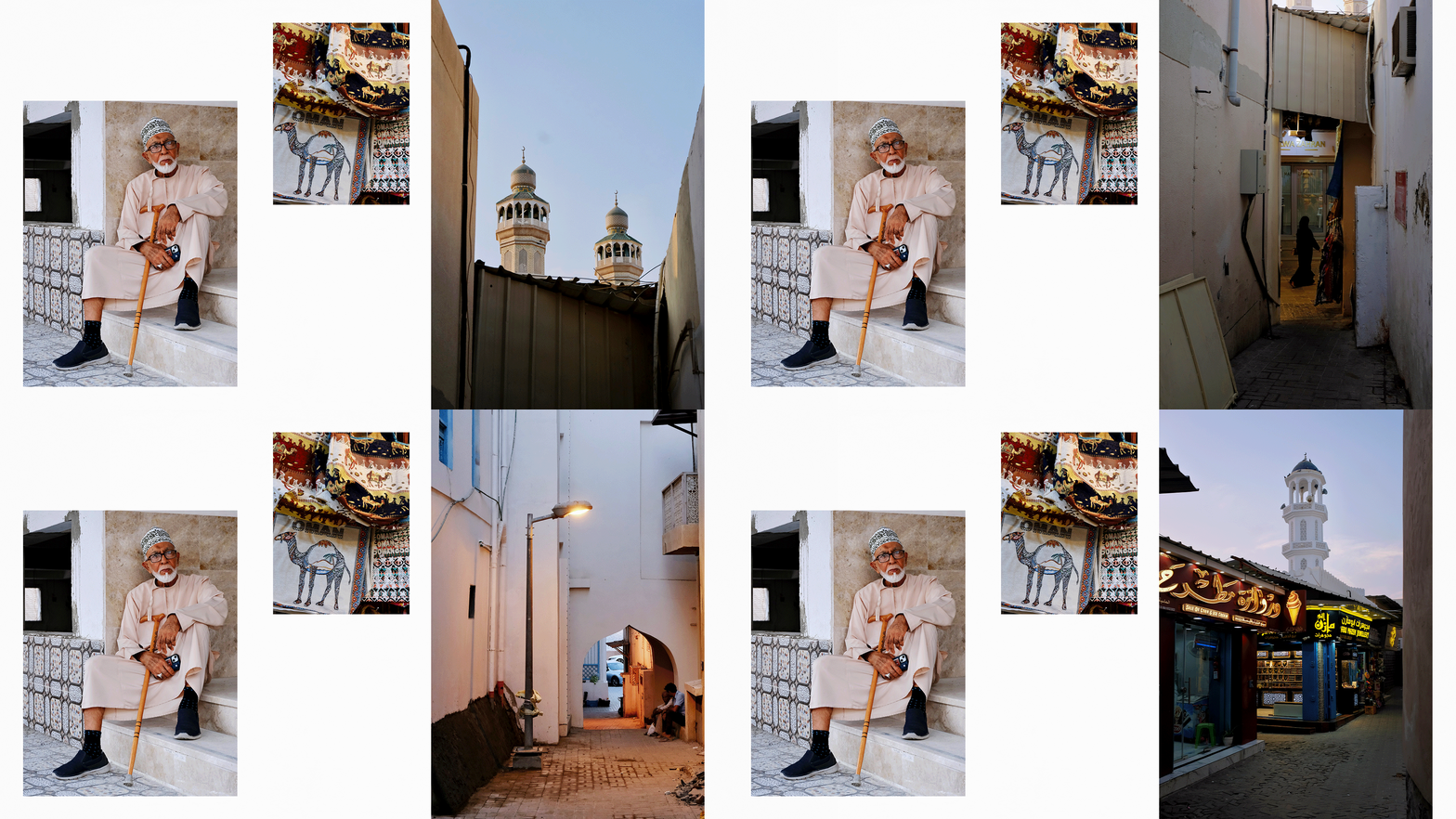
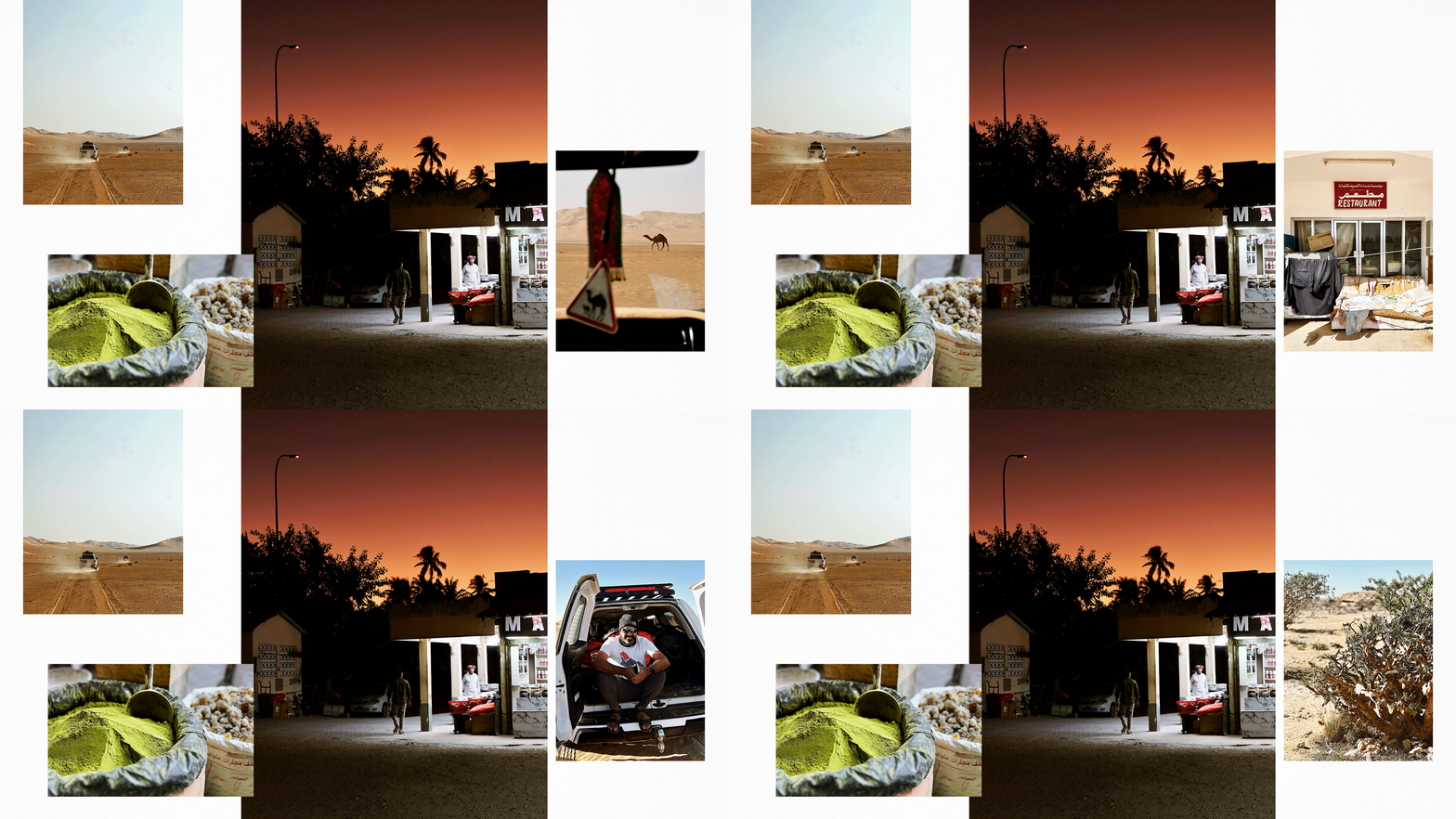
After a long shower, Muscat's city life calls in the early evening. It's the best time to stroll through the Mutrah souk and perhaps look for one or two special items. The roofed market is filled with intense scents: in this heavy, sweet medley, we recognise oud, amber, frankincense and sandalwood. The selection seems endless, given the countless pots, jars, bags and bottles. The scents are followed by rows of small shops selling silverware, daggers and lamps, and then one textile merchant after another. And of course, everyone entices us with the most beautiful goods, the best quality and the most attractive prices. Through the winding alleys, we come to the part of the souk where gold and silver jewellery is offered in glass-fronted shops. The craftsmanship ranges from Berber-inspired designs to modern rings, bracelets, necklaces and much more. Late in the evening, melodic chants ring out from the loudspeakers of the mosques, seeming to tell stories from distant lands and times long past. They lull us to sleep with thoughts of 1001 Nights.
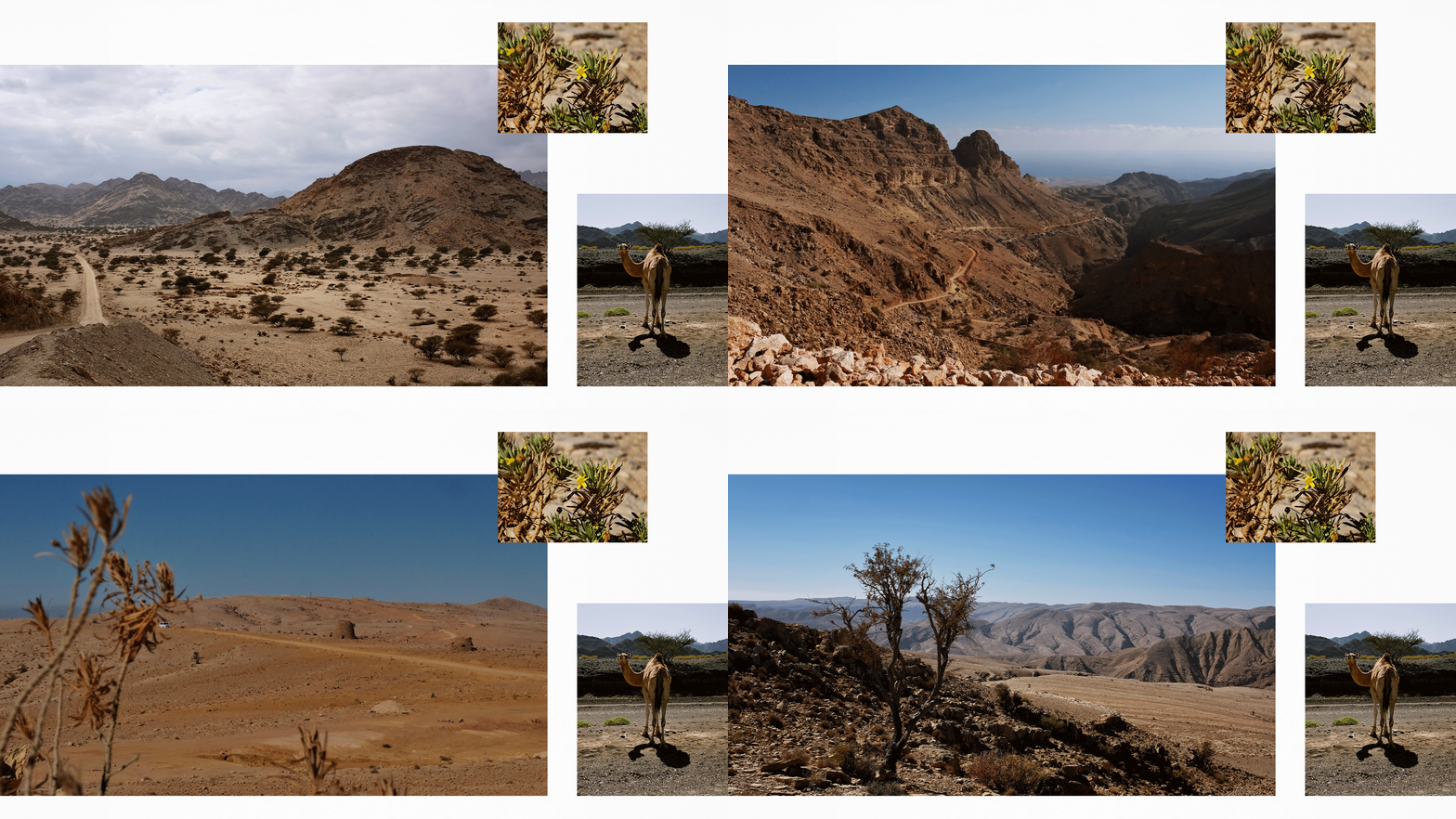
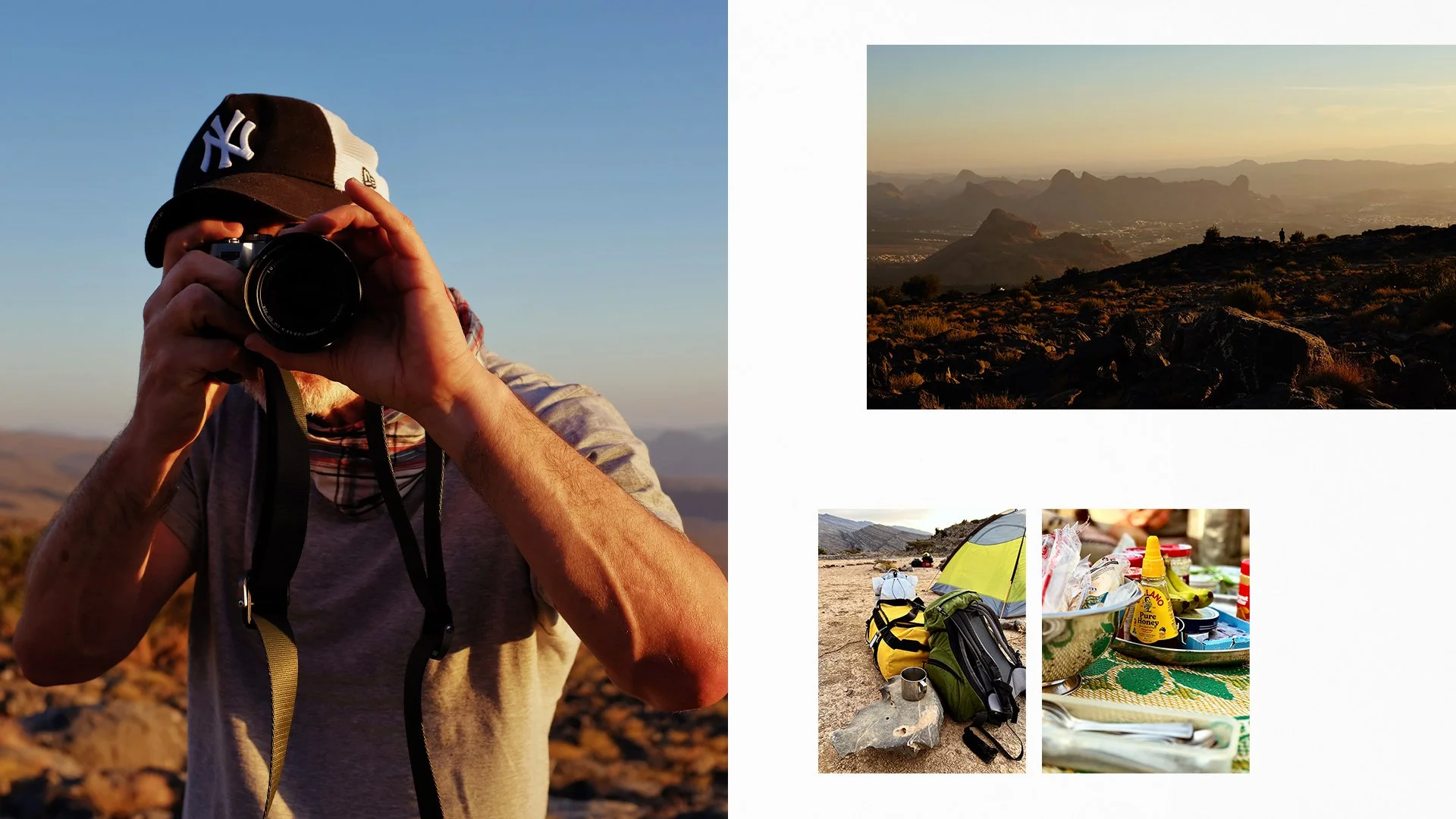
The first week passes quickly and we continue our journey. However, the next stage to Salalah cannot be completed in one of the sleek Western sports cars or SUVs that are so popular in Muscat. In powerful off-road vehicles, our Omani drivers Nasser and Saïd first take us further along the coast and then up into the eastern mountains. Shaped by thousands of years of tectonic shifts, the rock masses here are layered like slate slabs at an altitude of over 2,000 metres. Barren scree landscapes dominate the peaks, and we are amazed that people settle in this wasteland, defying the hardships of life here. At this altitude, goat farming is clearly more important than the Omani gold in the urban souks. The countless acacia bushes, which the goats nibble on contentedly, also stoically resist the local aridity and dot the surrounding brown and ochre tones with their dusty green.
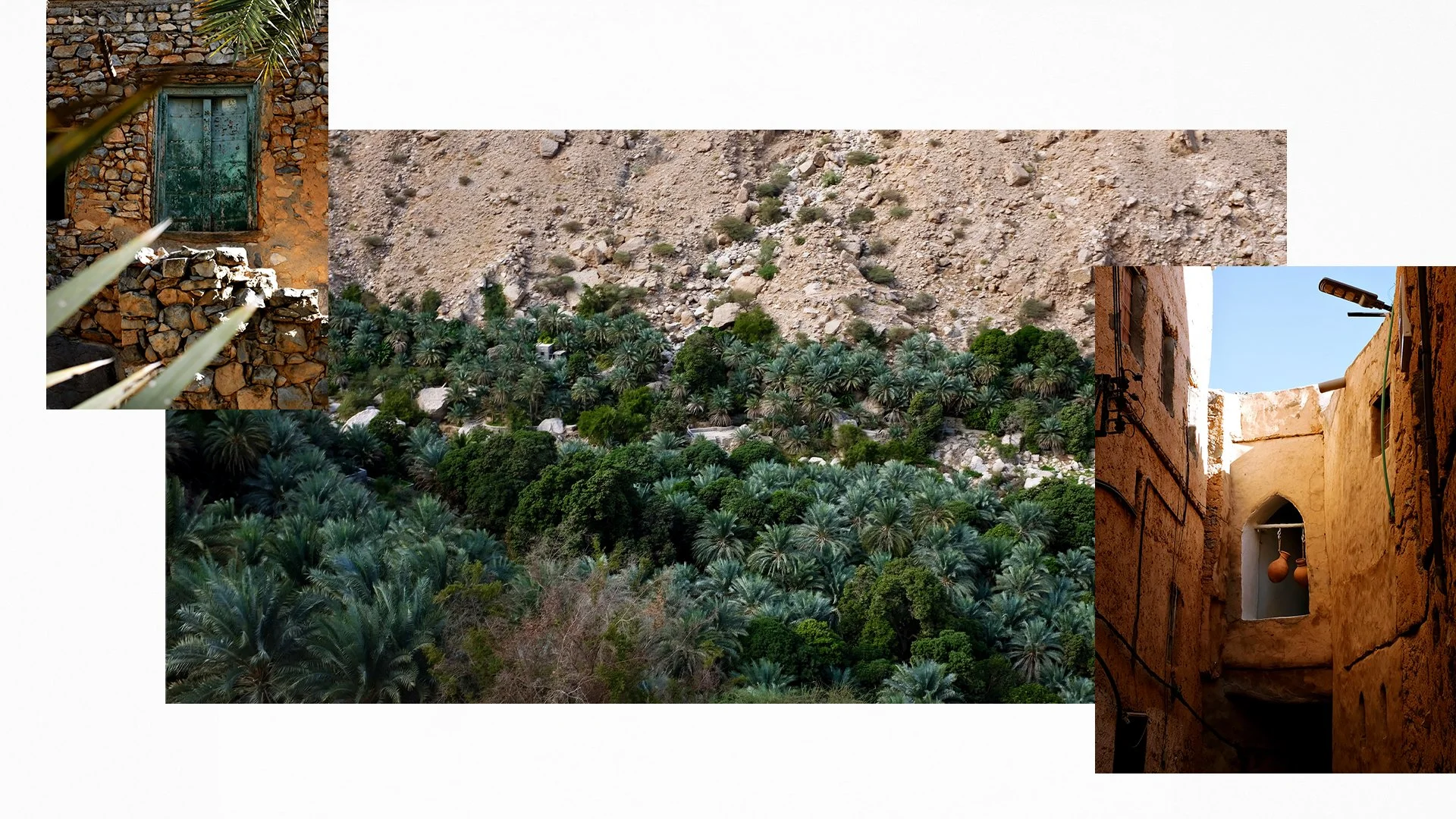
We drive downhill on mostly unpaved serpentine roads, and at the foot of the mountains it becomes clear: there is no life without water! Just like the roads we have just travelled on, riverbeds – called Wadis – now wind their way through rocks and gravel, providing enough food for the first camels on our journey with their shrubs and bushes.
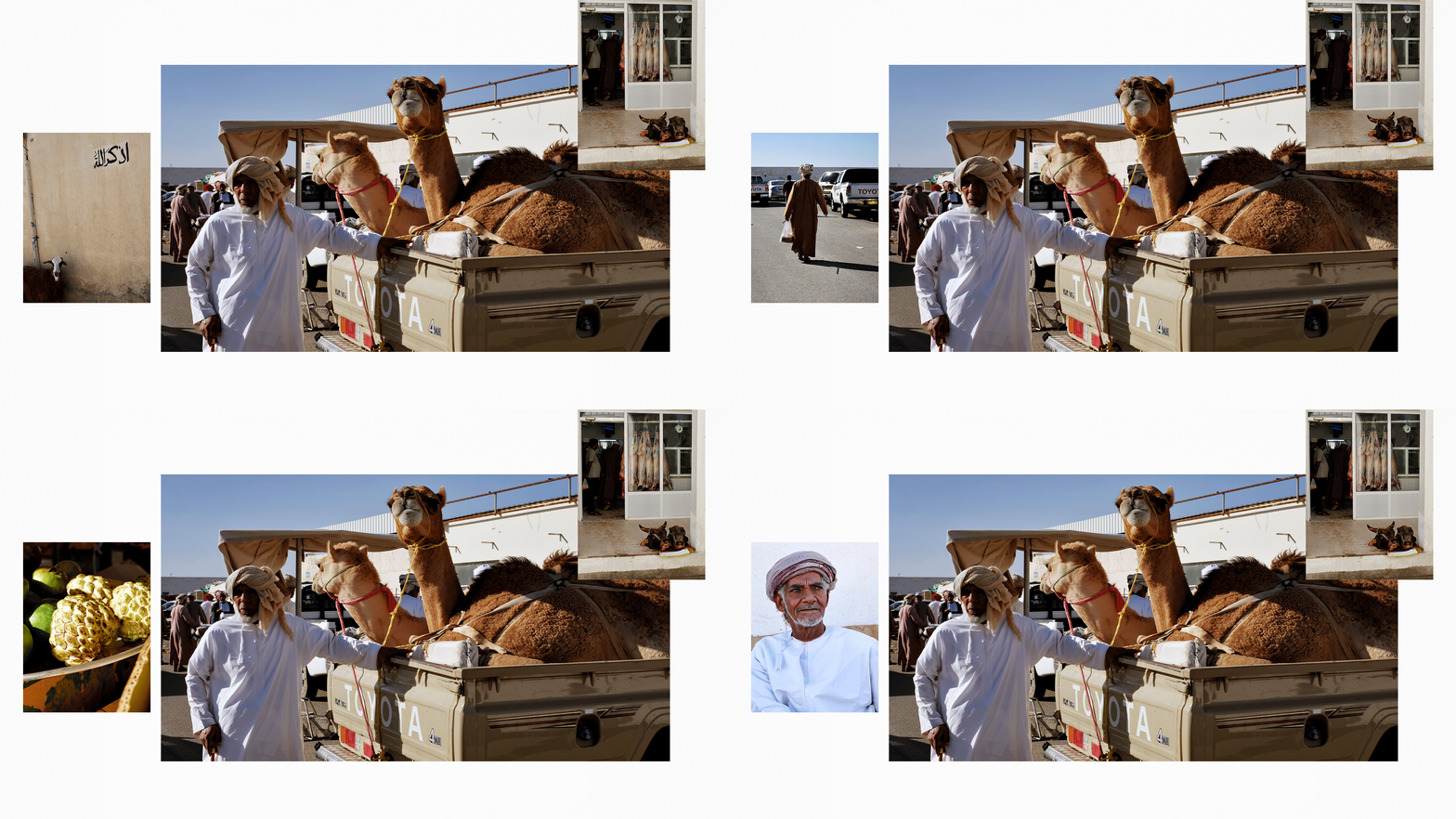
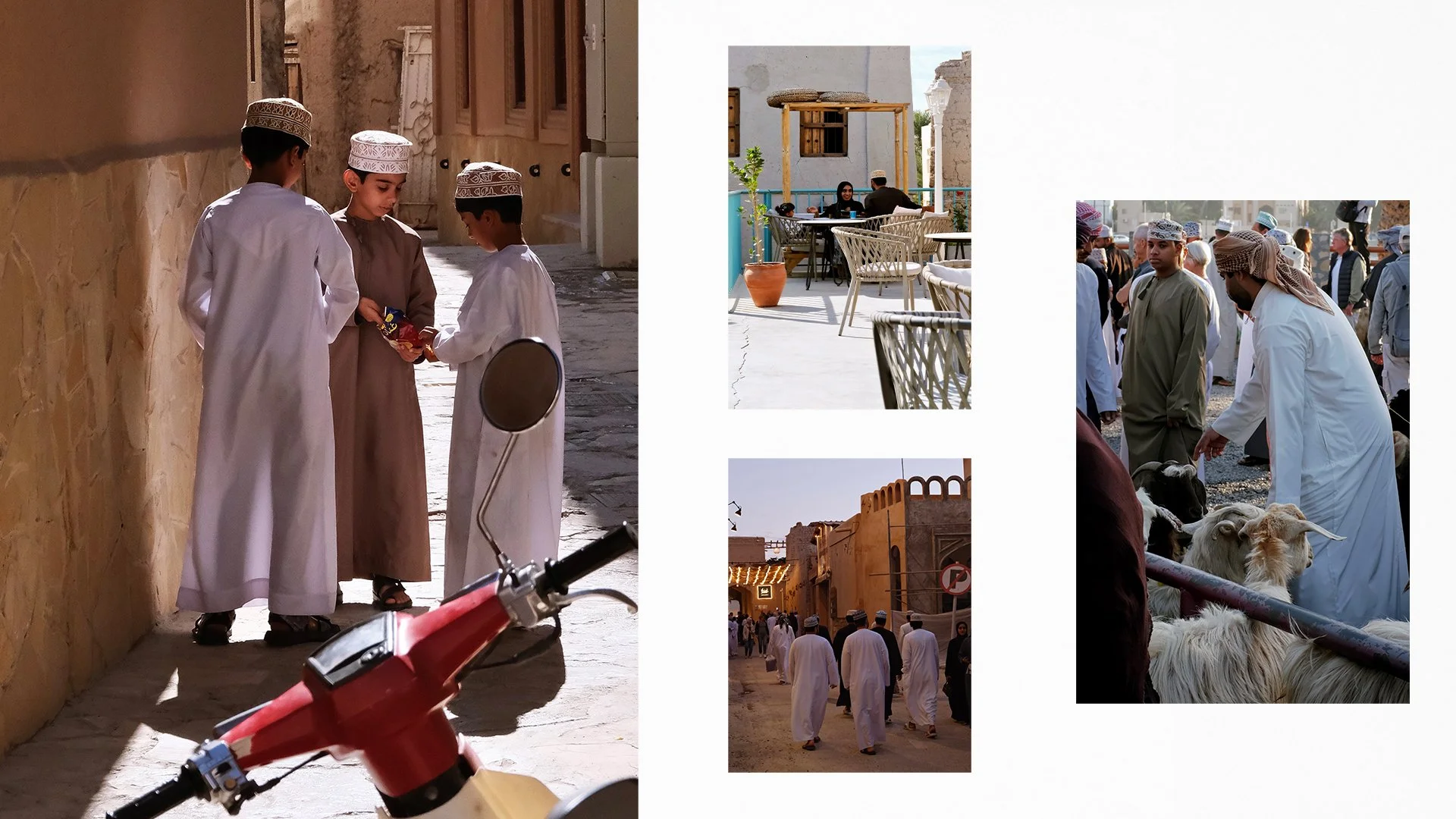
Camels on pick-up trucks are an unusual sight, however. At the weekly market in Ibra, alongside the humped desert ships, cattle, chickens and rabbits, all kinds of colourful vegetables and fruit, as well as daggers, weapons and walking sticks are on offer. Loud but friendly haggling sets the tone, and it is a great pleasure to experience how interested and welcoming people are towards us. It is no surprise that, thanks to a friendly smile and “Shkran” (“thank you”), we quickly strike up a conversation with the traders and are invited to enjoy Qahwa – the traditional Arabic coffee – and dates.
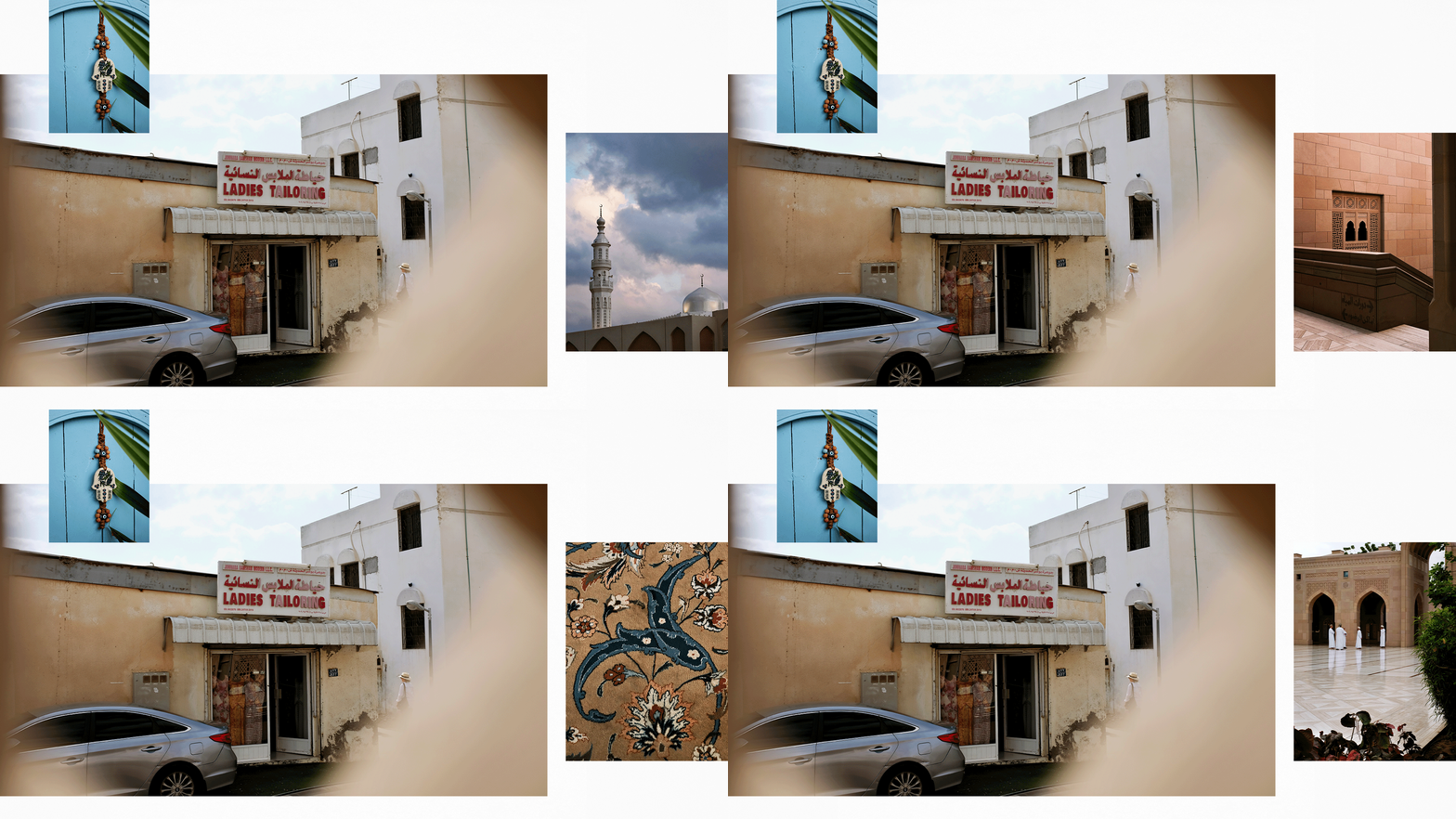
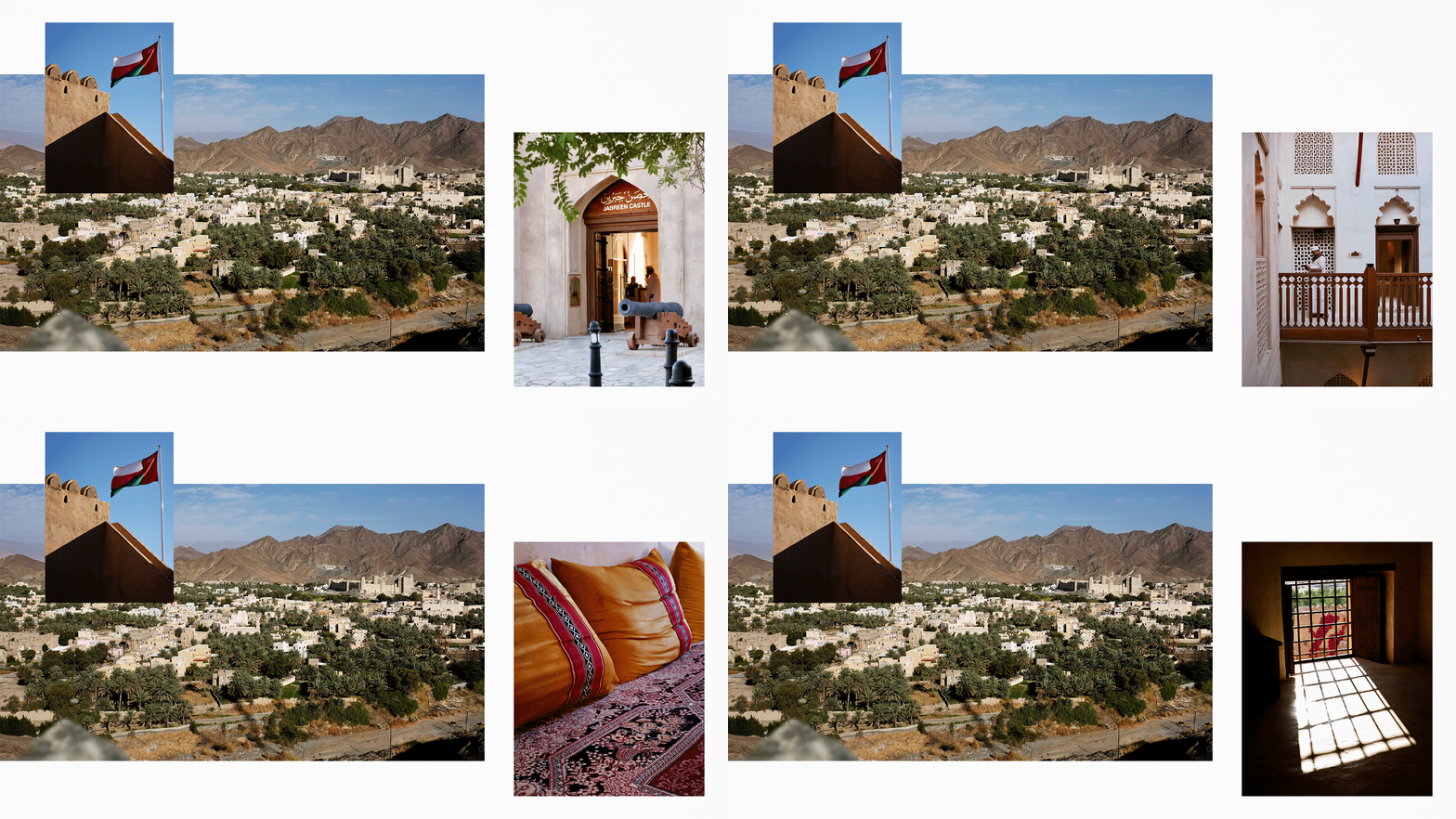
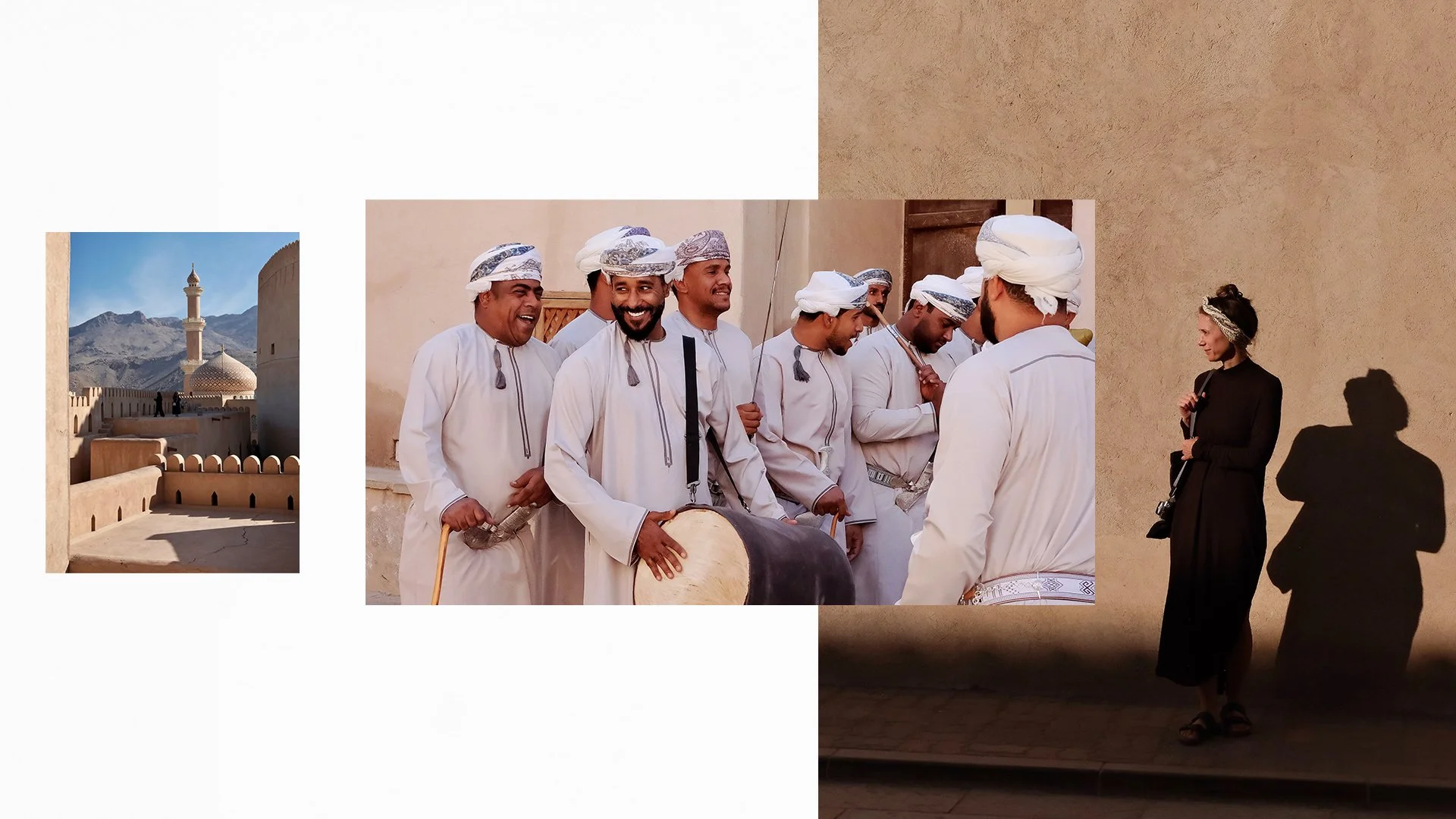
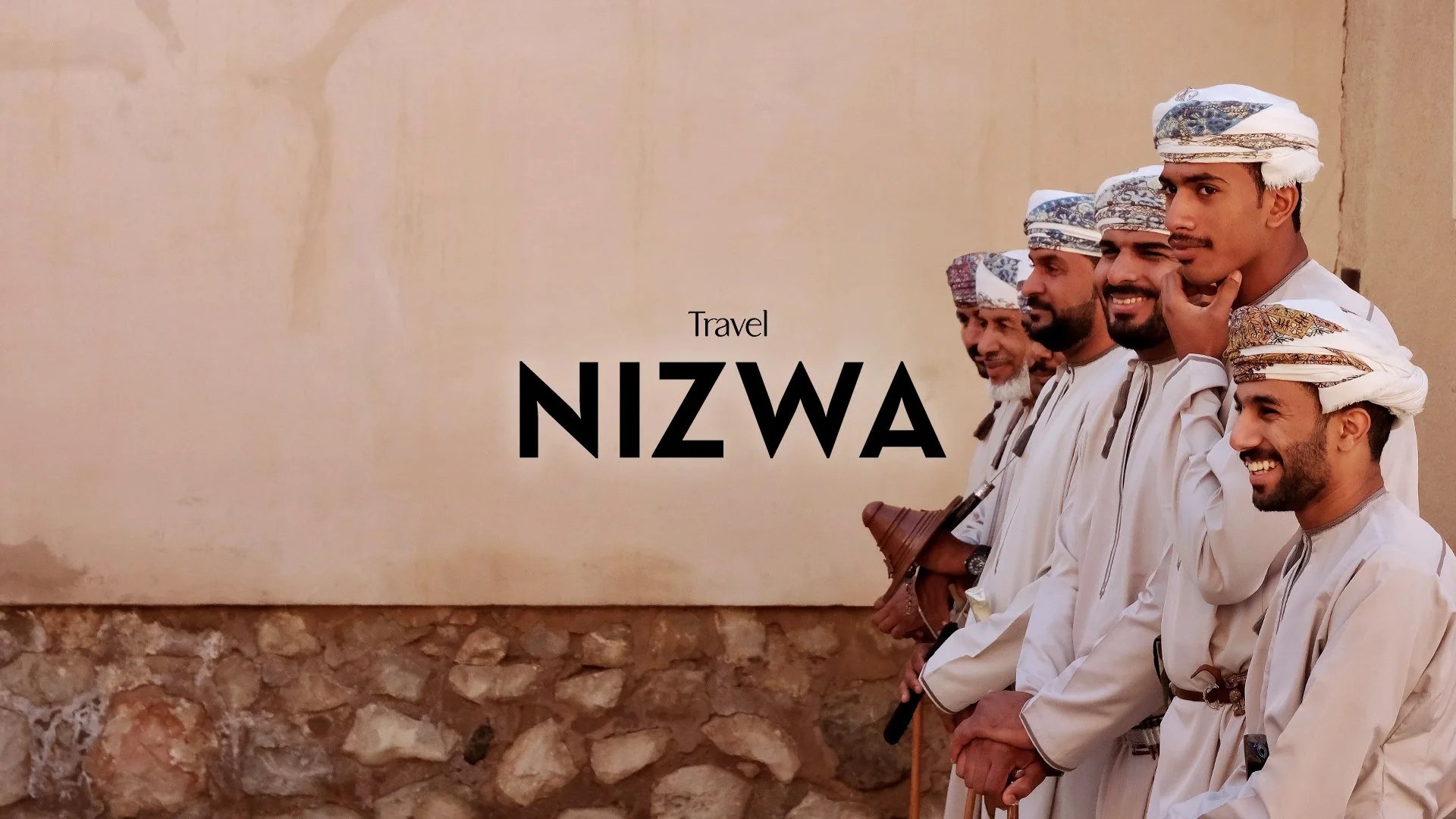
After a brief visit to Bahla and the nearby Jabreen Castle, our tour continues to Nizwa. Like Bahla, it was once the capital of the country and immediately impresses us with its lively old town. Starting from the historically significant fort, wide paths lead to the eastern and western souks with all kinds of pottery and metalware, souvenirs and spices, continuing on to the fruit and vegetable market, the fish and livestock market and a modern sales hall for various types of dates. After the morning hustle and bustle, the narrow streets of the old town fill up again at 4 p.m. with men dressed in white and women dressed in black. We mingle with the sociable – and above all fragrant – people, pause, observe and enjoy how friendly everyone is to each other.
That evening, we take one last long shower before the desert sand of the Empty Quarter completely engulfs us for the next days.
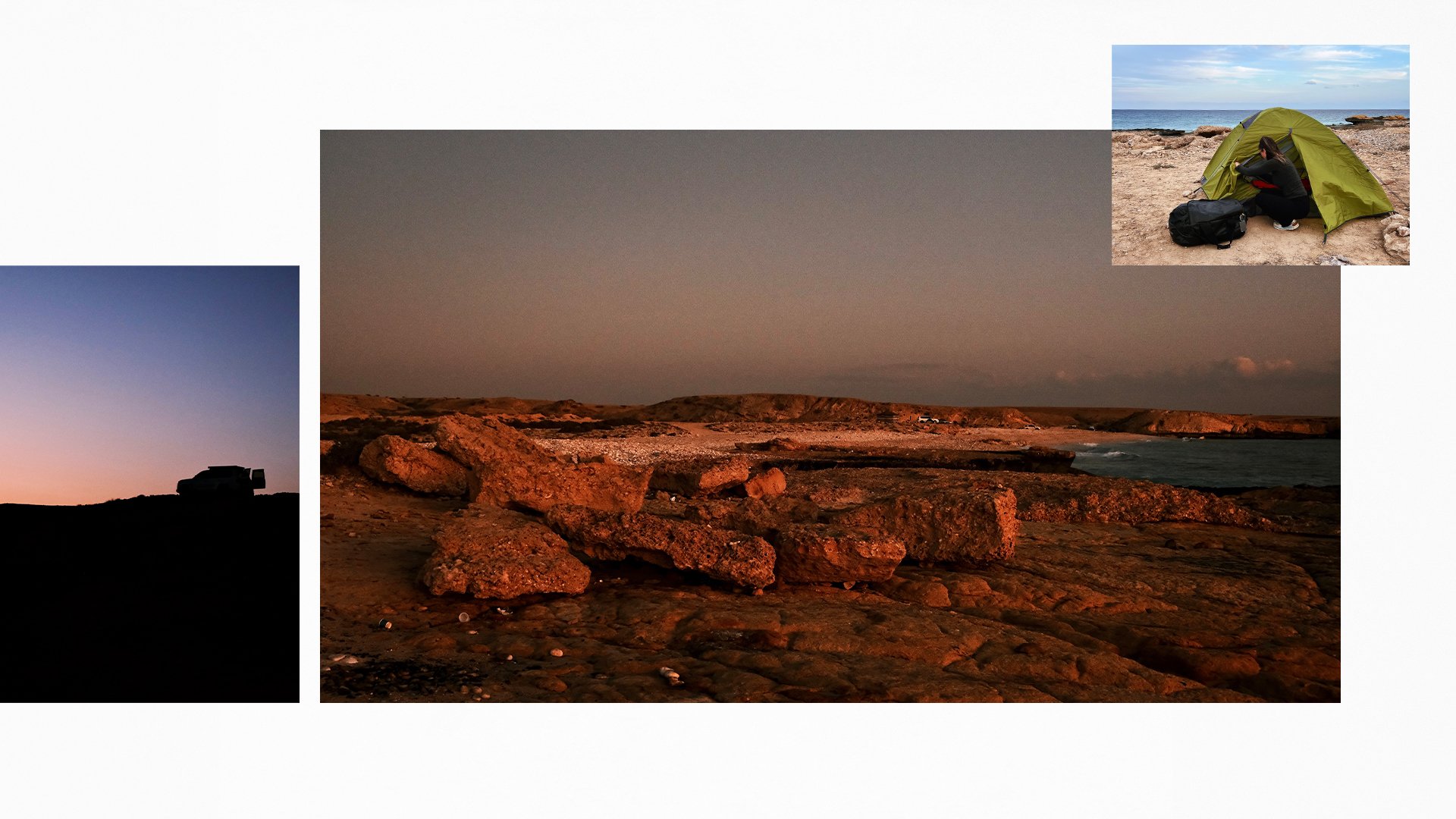
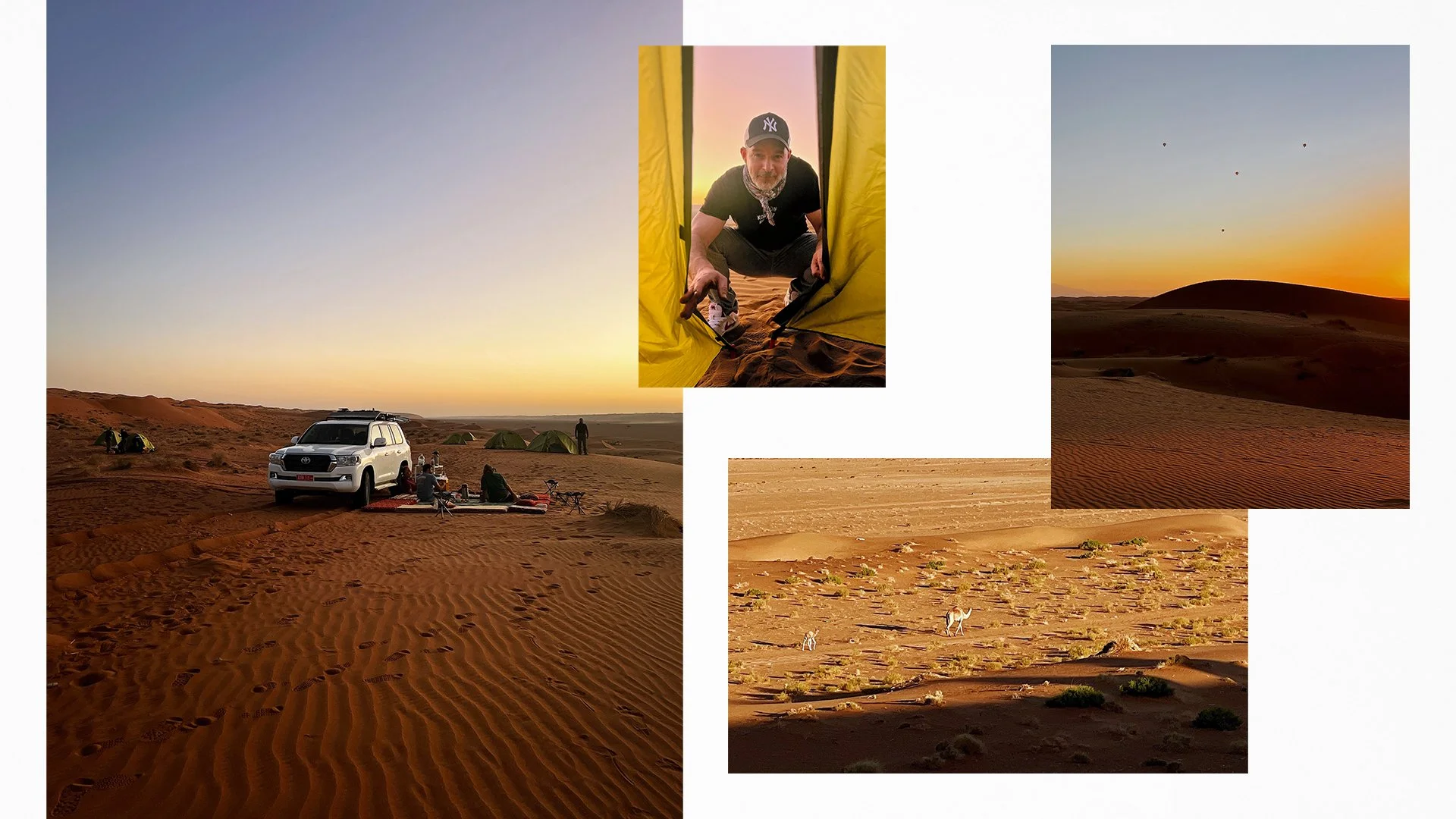
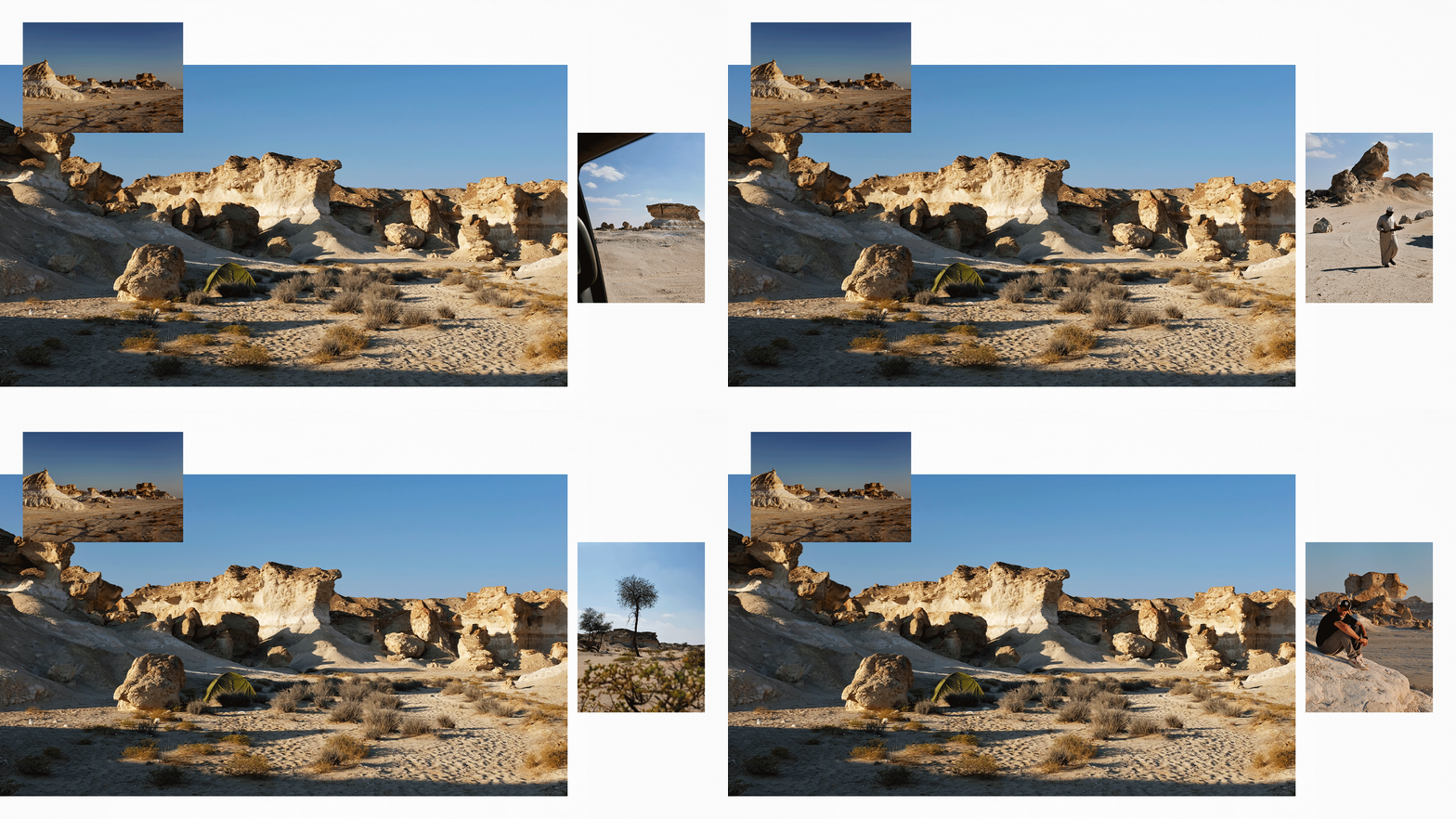
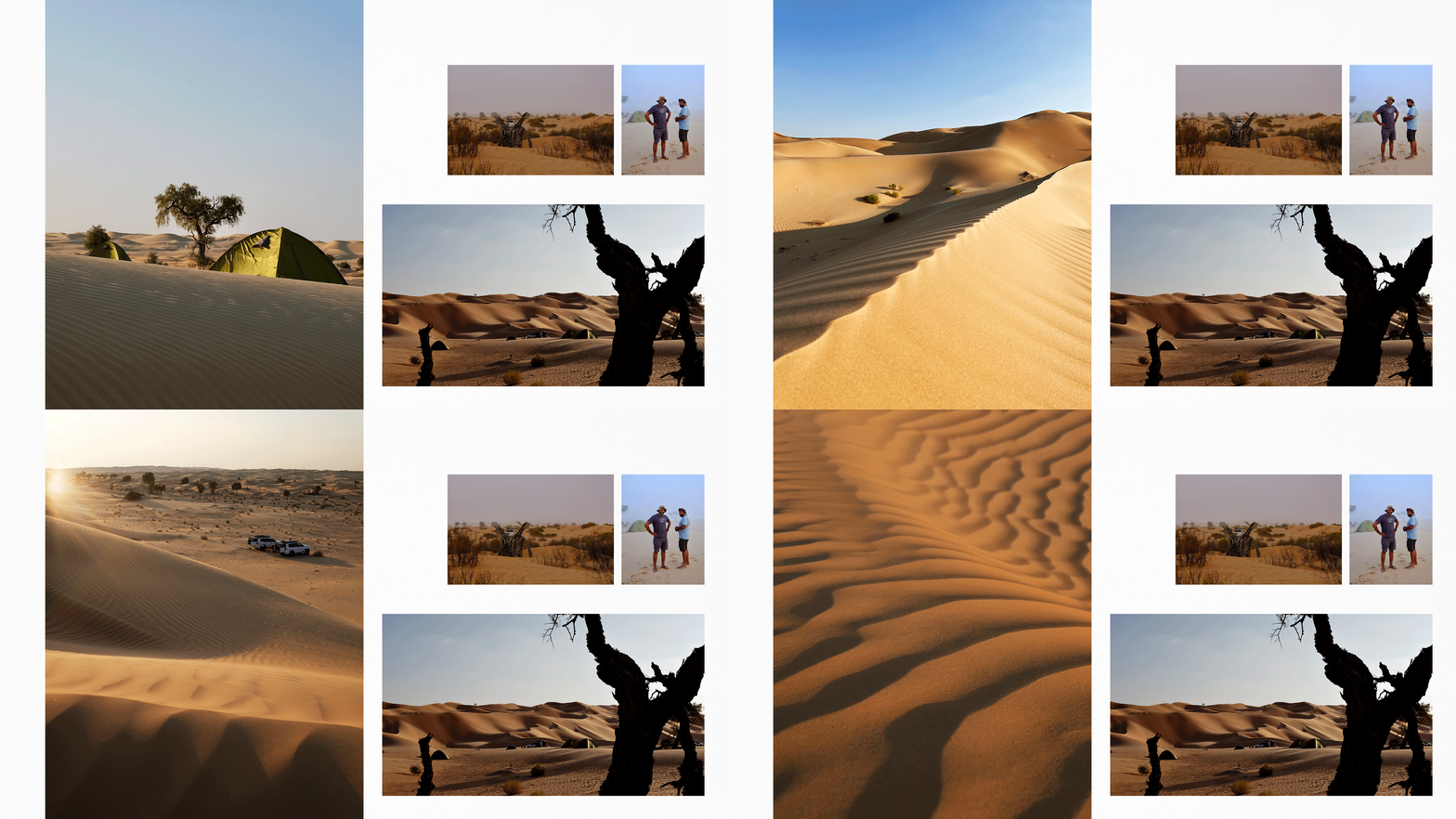
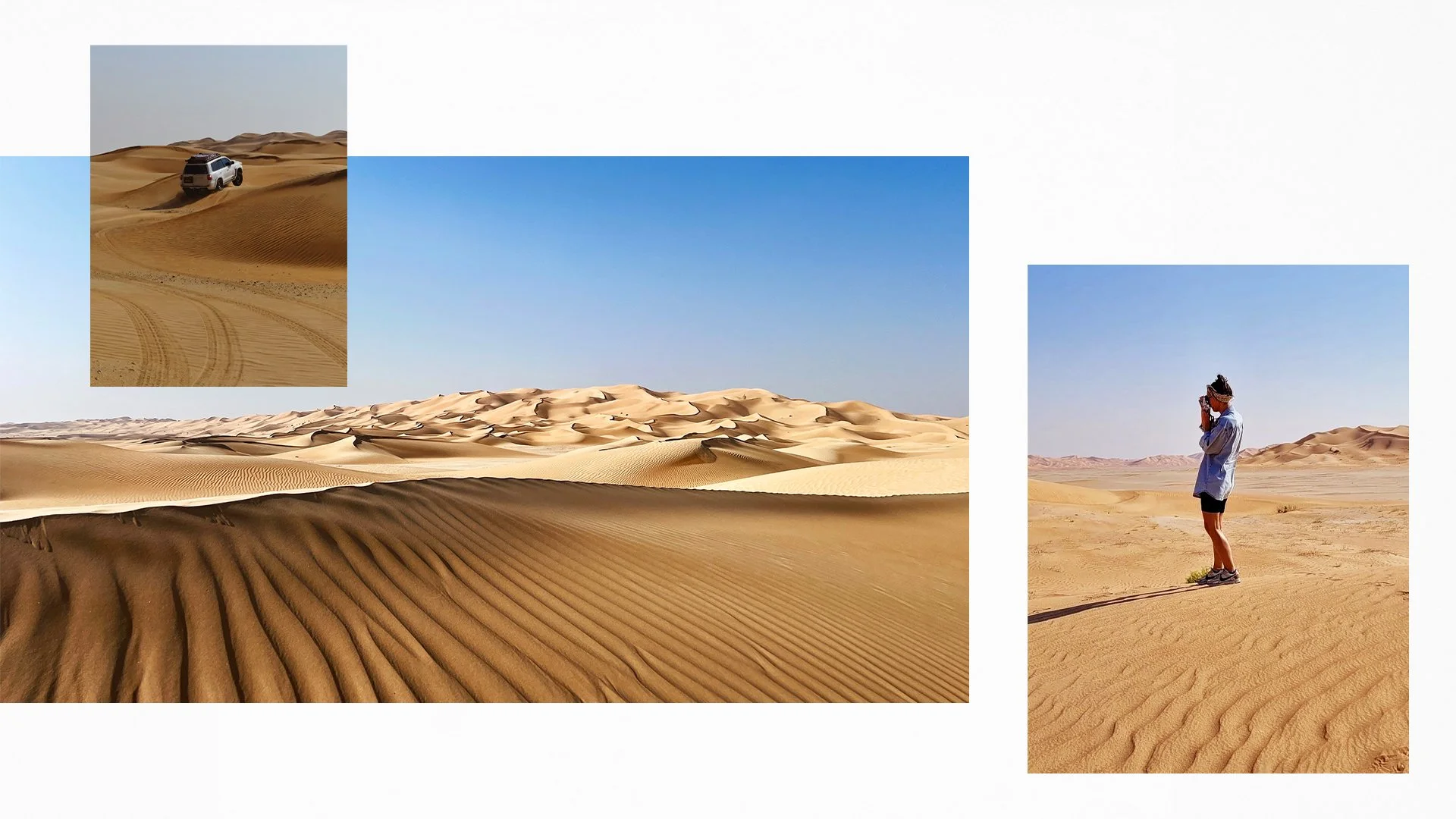
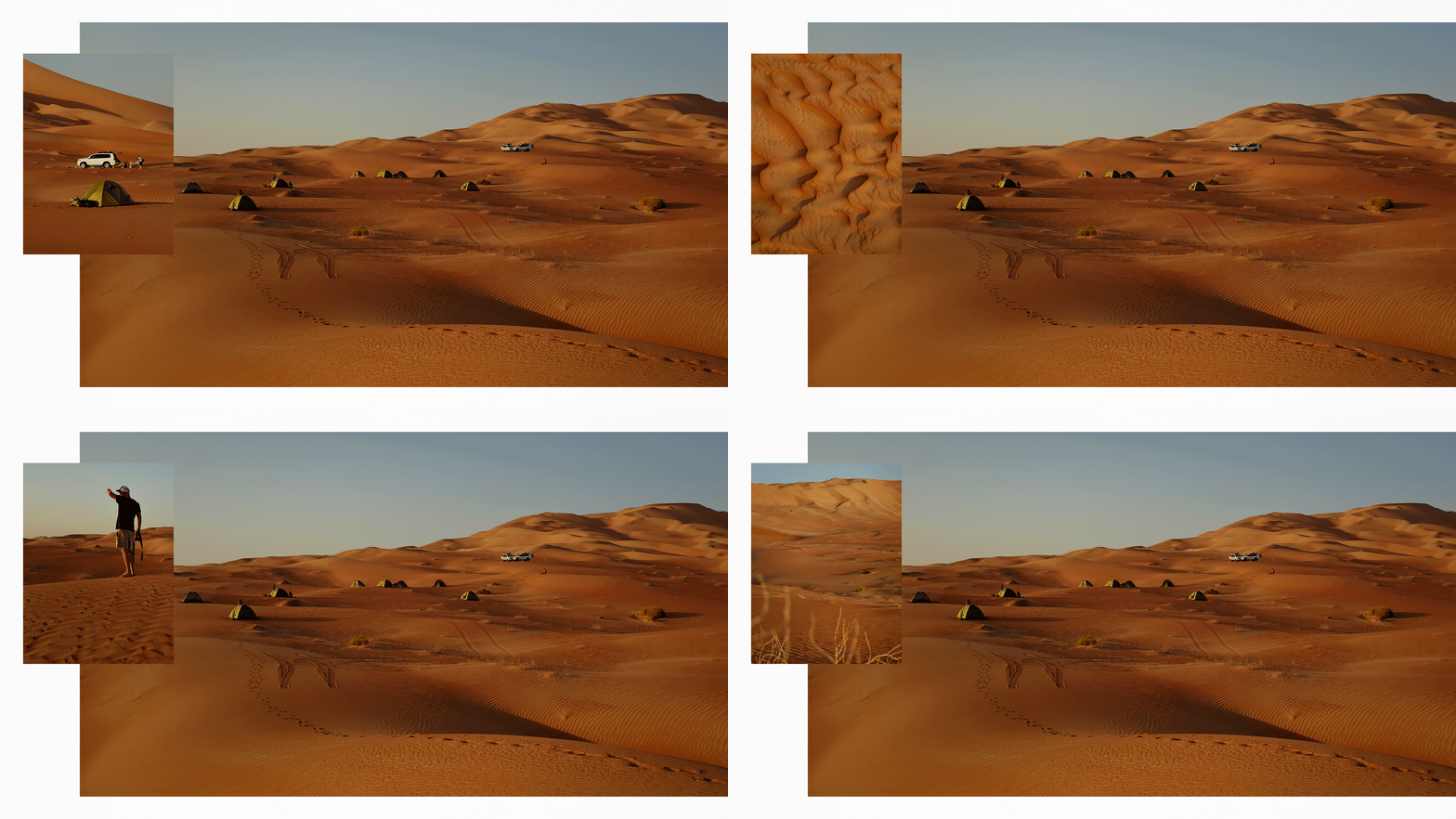
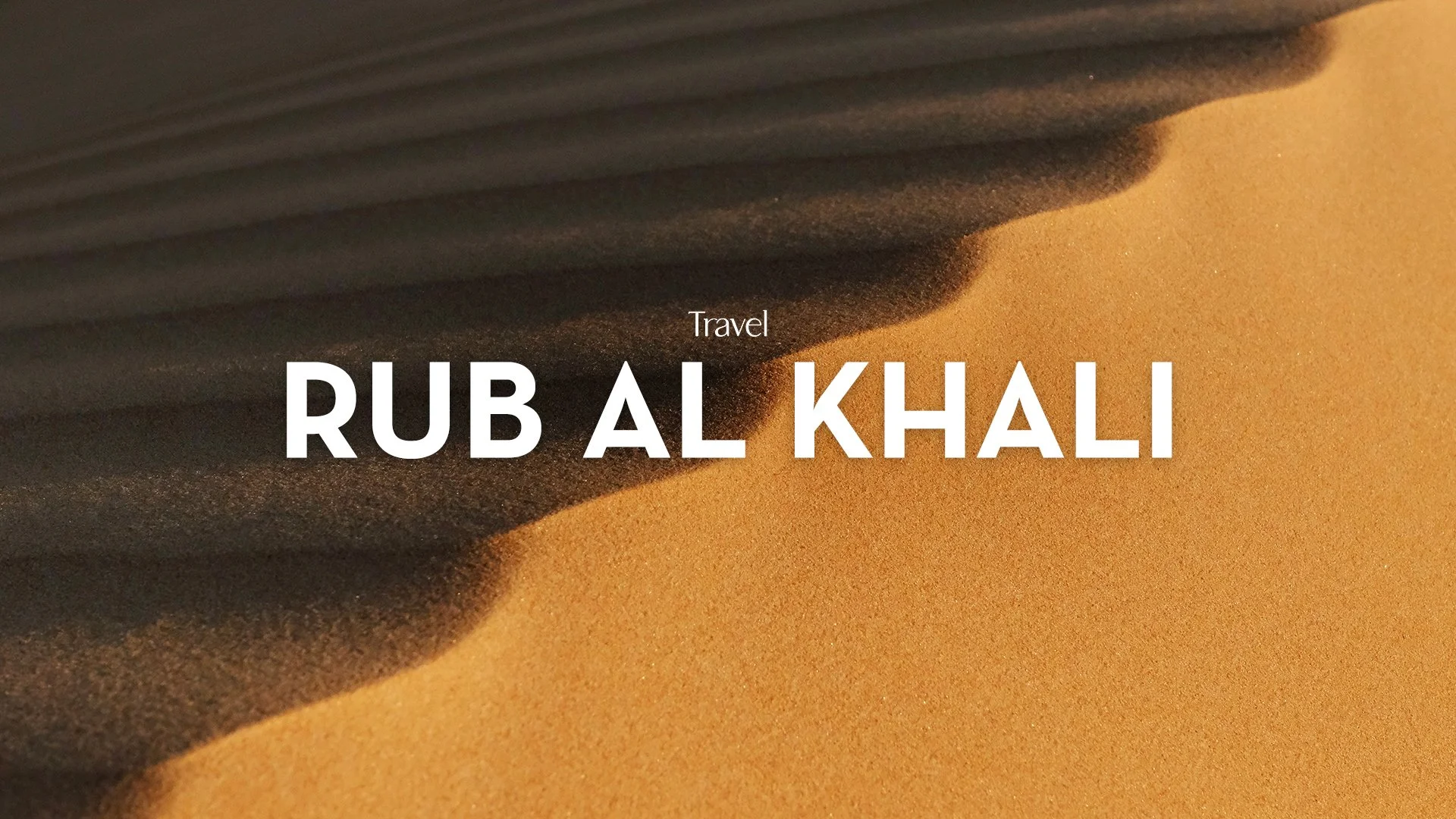
When the rapidly rising sun bathes the sky in a girlish sea of pink and orange colours from 6 a.m. onwards, the air begins to dance. All around, the ground shimmers, making the rising heat visible. At the edge of the Empty Quarter, the wind forms mushroom-shaped formations out of stone. Here, the merciless fireball dries the ground into extensive flaky plates, making it difficult to recognise and interpret animal tracks from birds, salamanders, scorpions and desert foxes. Further south, the dunes of the Rub al Khali are visibly forming. And with every kilometre we drive, more and more red mixes into the white sand, colouring the dunes in an enchanting ombré. The sand mountains pile up higher and higher in front of us, turning the rest of the journey into a fun adventure. Nasser and Saïd skilfully navigate us over steep dune ridges and through soft sand valleys to our next campsite, where we crawl into our tents under a starry sky and the smiling crescent moon.
After five days in the sandy wilderness, we approach Salalah and are once again greeted by a strong coastal wind. There has been little rain recently, so countless cows, camels and donkeys graze on brown stubble fields to the left and right of the road. The townscape is characterised by the frankincense and fruit cultivation of the surrounding area, with one perfume shop after another and one stall after another selling bananas, mangoes and melons.
On the palm-fringed sandy beach, we watch the sunset over the Arabian Sea for the last time. And as the call to evening prayer begins its chant, we say goodbye to a country whose people have touched us deeply and whose landscapes have impressed us in so many different ways. “Shkran” Oman.
Oman, December 2025. | All words and photos by The Sturgheons.