City TRIP
Nizwa
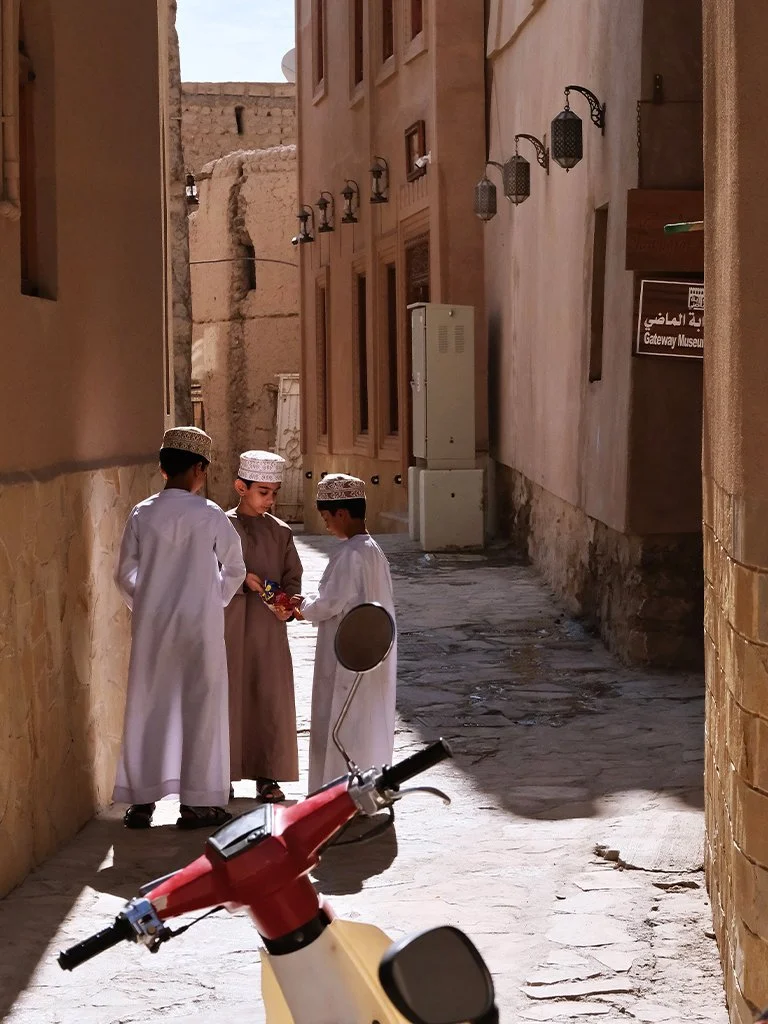
Everyone knows them. Those places that immediately captivate you. But not in an intrusive or loud way. Rather, they give you time to arrive, wait patiently and then begin to tell their story. Quietly, they recount their history, bringing the past to life and gently carrying it into the present. Nizwa is just such a place.
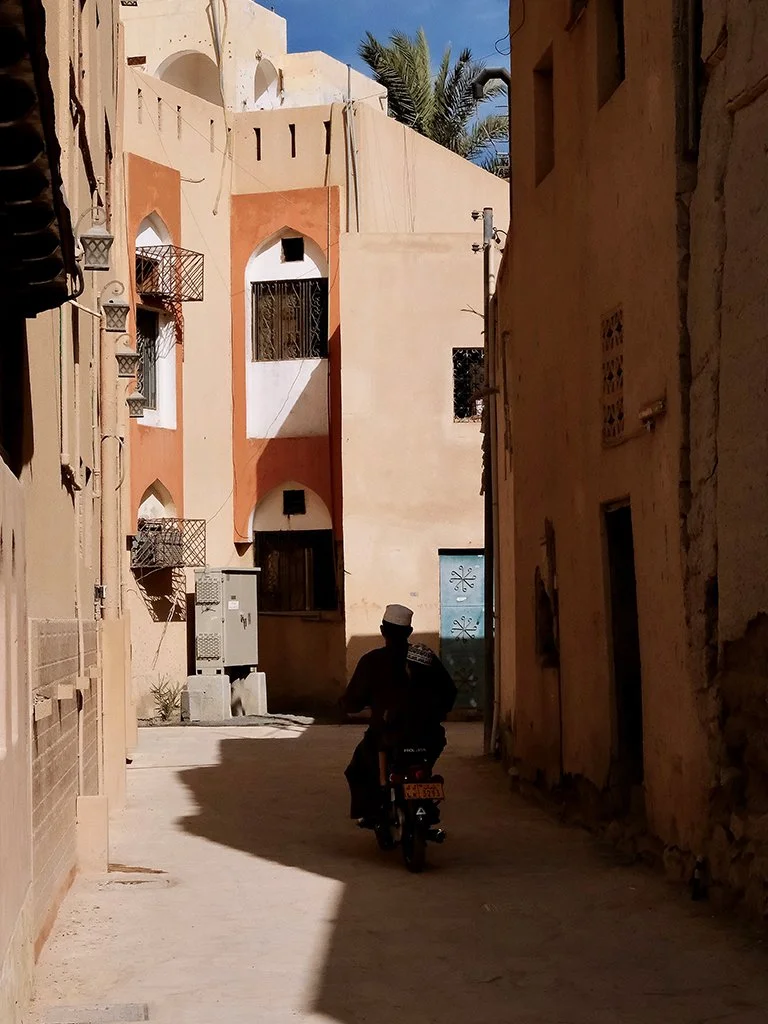
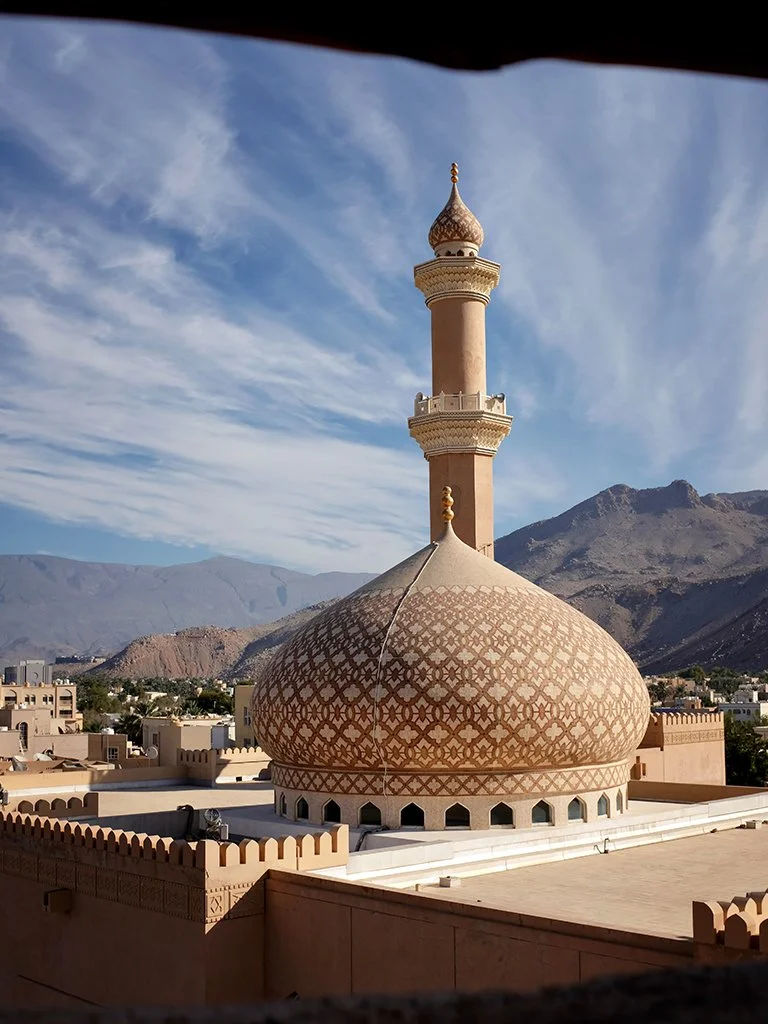
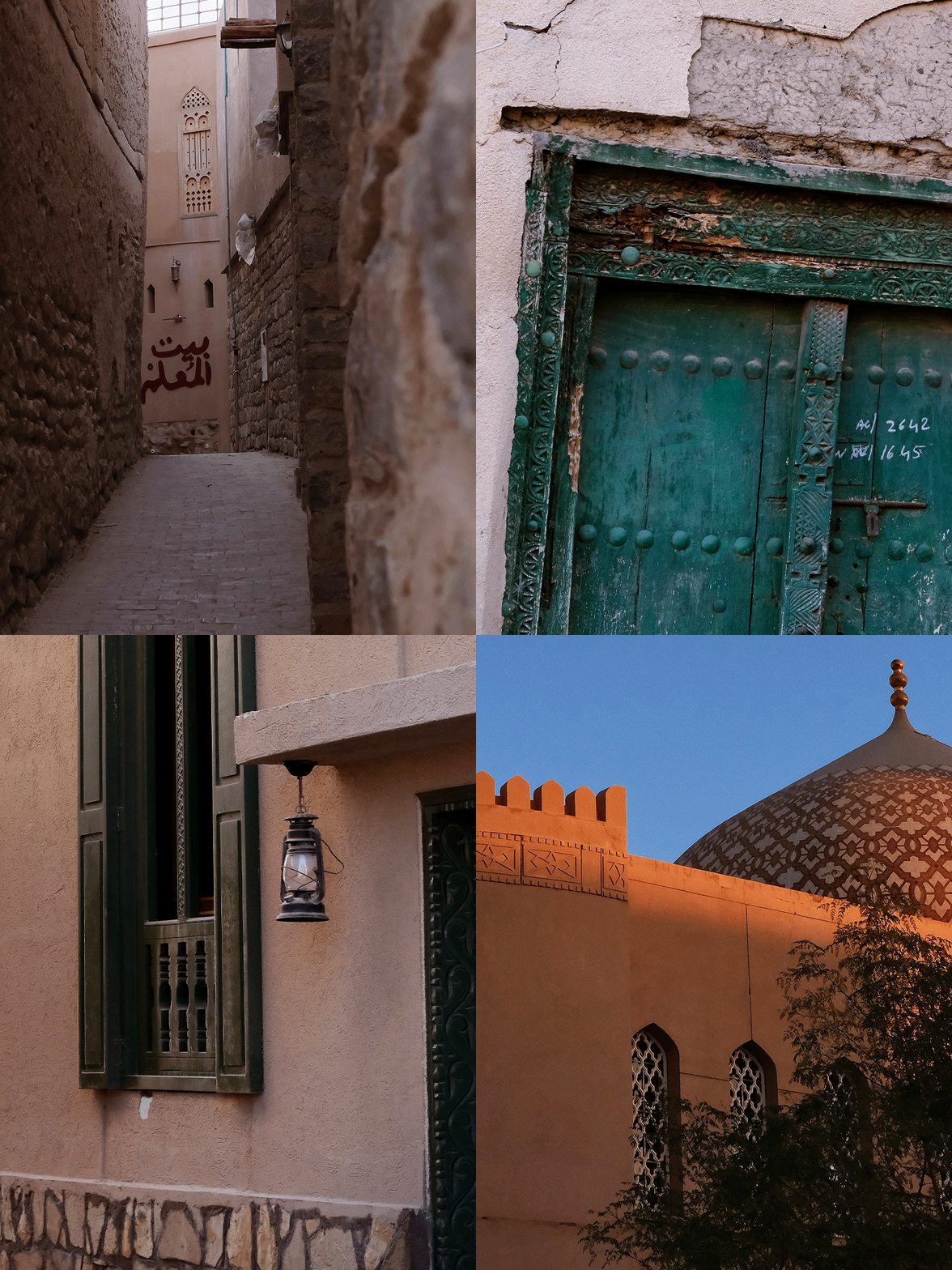
We reach Nizwa in the early evening and feel a bit like Ahmad ibn Majid after a successful crossing. Sailors packed with suitcases and backpacks, looking forward to their arrival after a long journey. The heat of the day is just loosening its grip, allowing the city to visibly breathe a sigh of relief. The light of the evening sun bathes the alleys, walls, minarets and their onion-shaped domed roofs in deep orange, and we sense that two days full of discovery await us here. Soon afterwards, we sink into our beds and let the city continue to whisper outside.
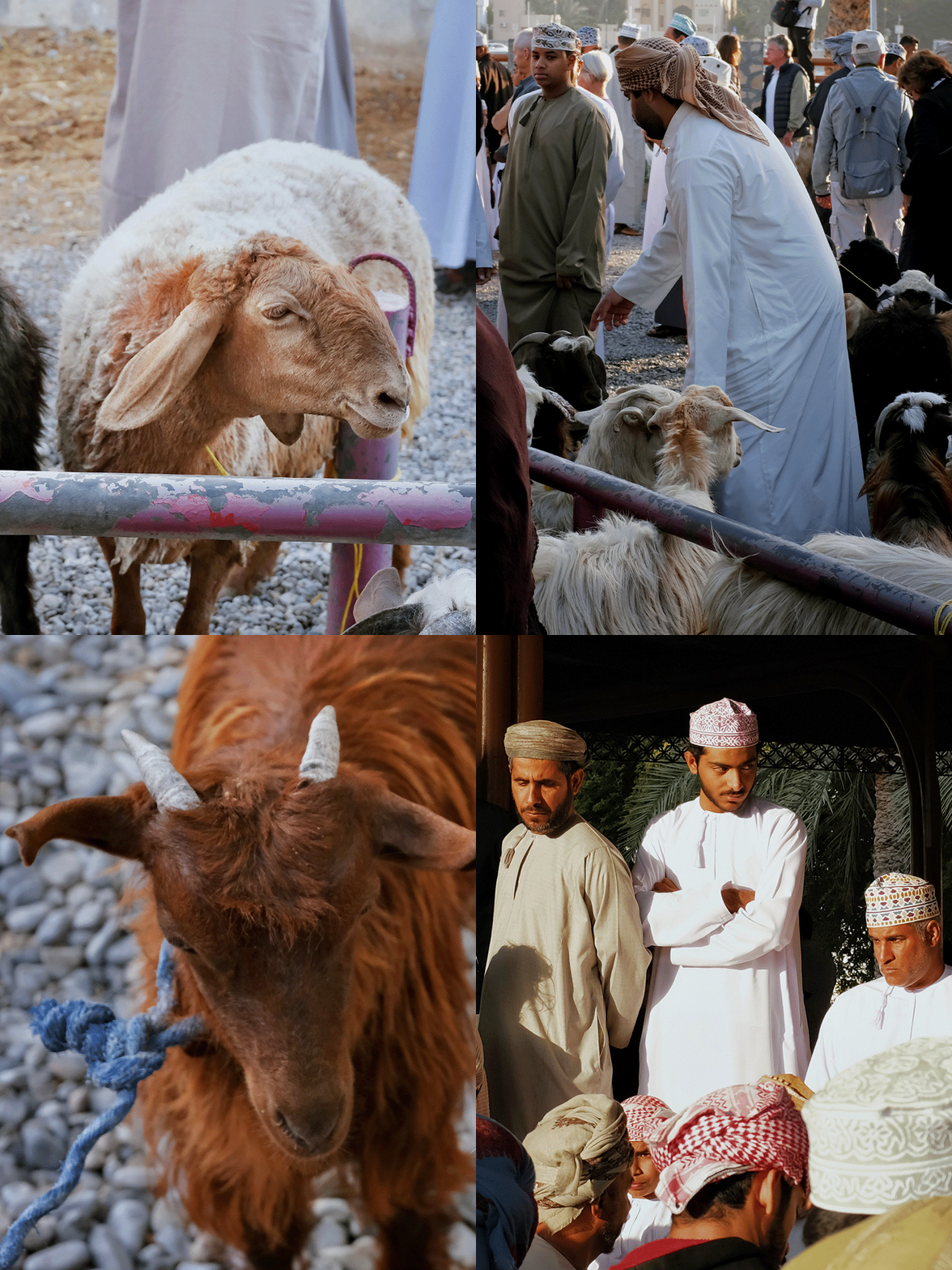
In the early morning, we follow the city's voices to the livestock market. What we find here is not a tourist spectacle, but everyday life in action. People have been trading and bargaining on this circular, open square for a long time. Nizwa was once an important stop along the caravan routes, and so the local cattle market was not only a place of trade, but also a social space: property and prices, experience and trust were openly exchanged here. A behaviour that seems to have remained unchanged to this day.
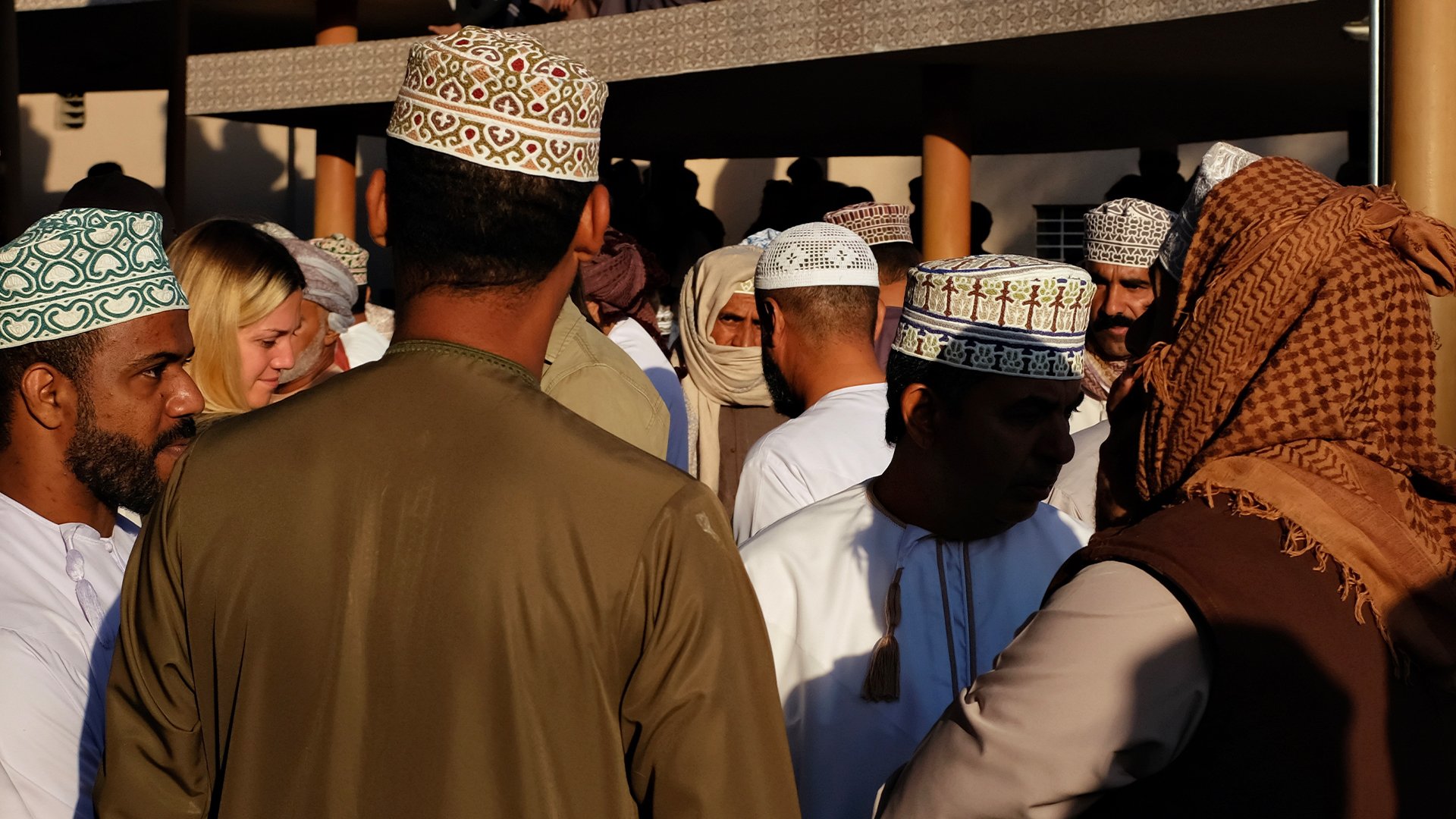
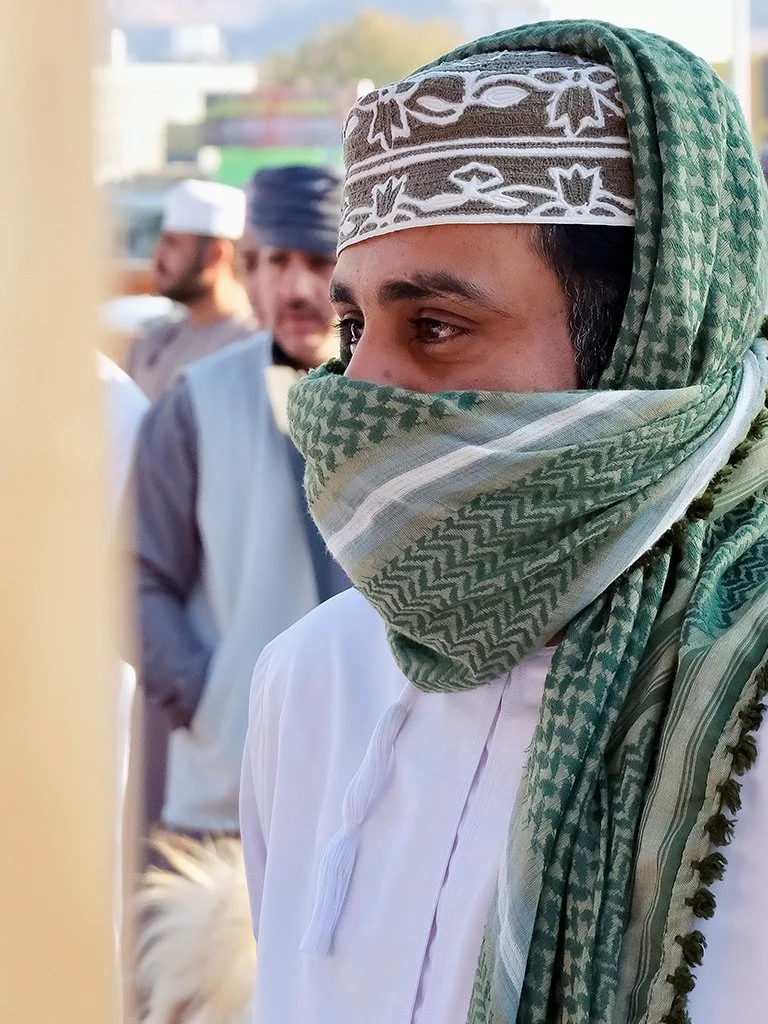
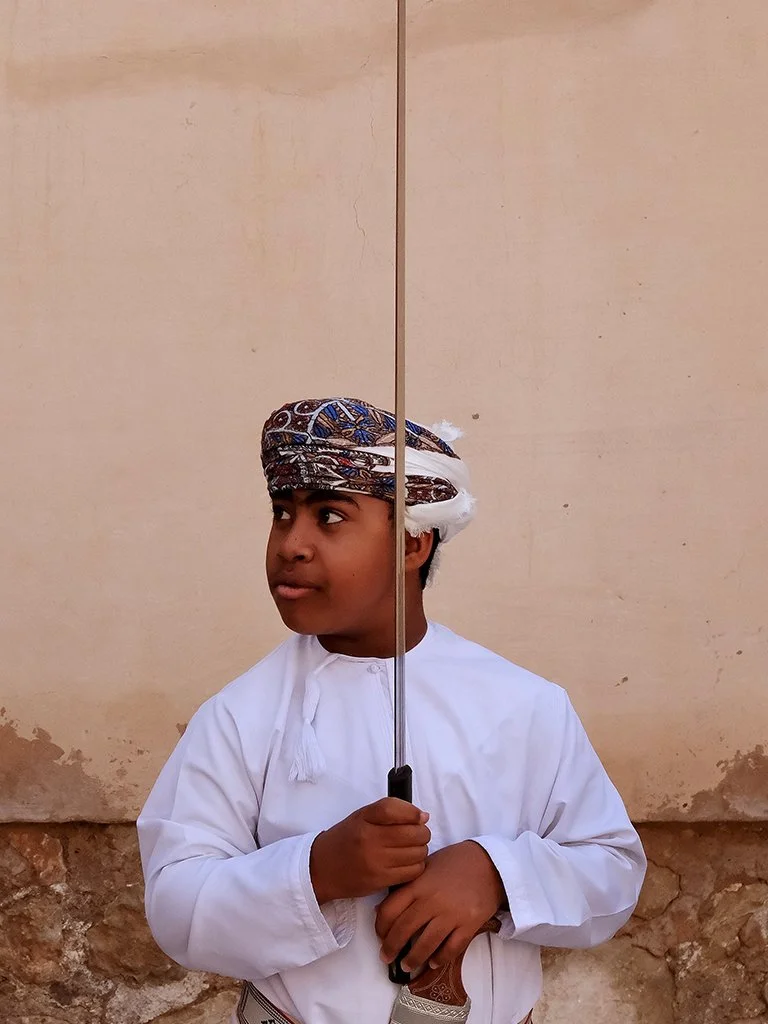
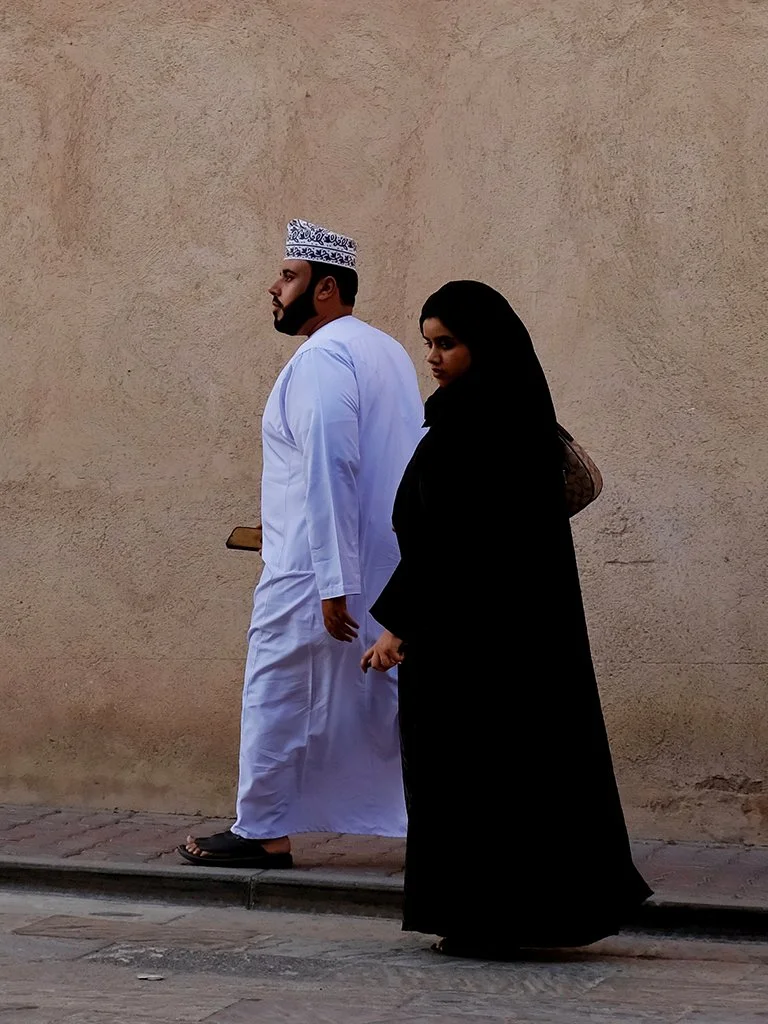
This morning, too, countless men are negotiating with each other in a respectful and focused manner. Unimpressed by the tourists crowding around the trading circle, they go about their business as usual. Following tradition, this is a business for men, all of whom are dressed in ankle-length robes (Dishdasha), combined with either a cap (Kumma) or a headscarf. With determination but without haste, the traders bring their “wares” into the circle, parade them around once and then return to their places on the outer edge, where they are examined closely. Pony-sized sheep nervously pace up and down, silky spotted goats wriggle on their posts and calm-looking oxen lie on the barren ground. Here, offers are negotiated, decisions made and sealed with a handshake. We are impressed by this timeless exchange: no shouting, no pushing, no rushing.
From the bustling livestock market, our journey takes us to sweet abundance. Dates everywhere. In Oman, and thus also in Nizwa, dates are not just dried fruit – they are an obligation: cultivation begins with the planting of date palms, which require a lot of heat and water. It can take 3-7 years before the first fruit can be harvested. Even today, the fruits are mostly harvested by hand. Dates are therefore highly valued and served to welcome guests and show them appreciation.
In the small, modern market hall in Nizwa, we sample a small selection of the more than 150 varieties of dates available in Oman. Shiny or matt, wrinkled or plump, amber-coloured or sun-golden, varieties such as Khalas, Barni and Khunaizi are on offer. And as many varieties as there are, each one tastes different: caramel-sweet, buttery-delicate or mildly sugary.
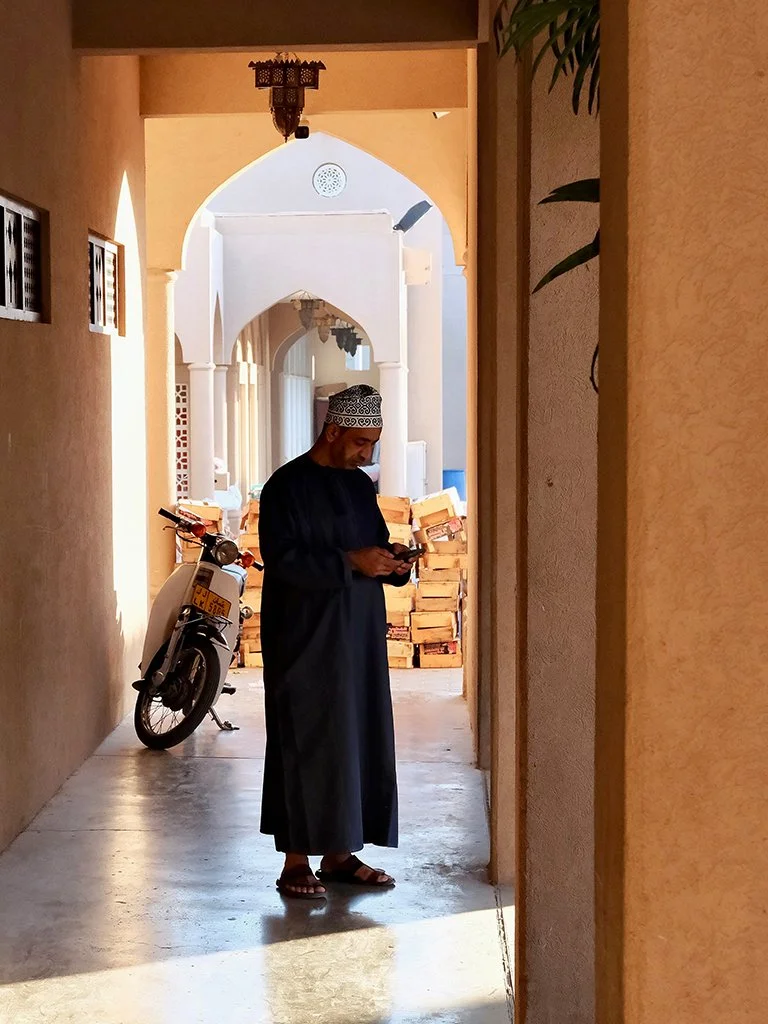
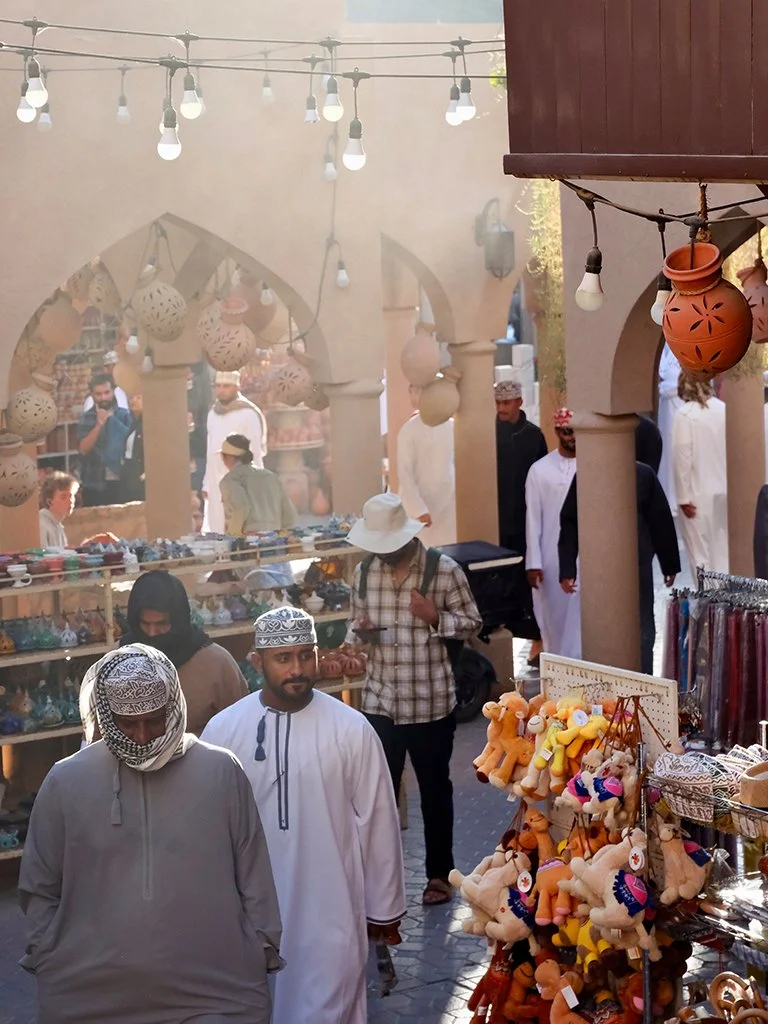
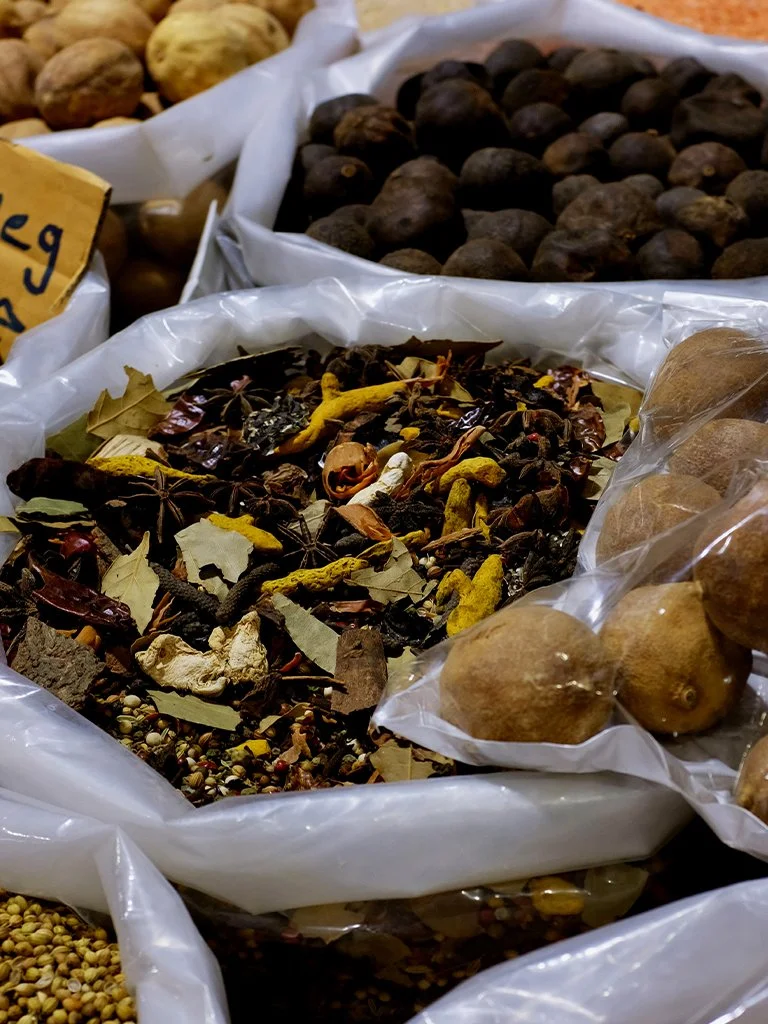
Opposite the livestock market and the date hall is the large market hall. Here you can find all kinds of vegetables and fruit, chocolates, dried fruit, nuts and several varieties of Halwa – an immensely popular dessert in Oman. We are waved over to almost every stall and encouraged to try the goods. Amidst this riot of colours and scents, we enjoy our own personal highlight: lemon mint juice. Fruity, minty and wonderfully refreshing. A welcome little break on this eventful morning.
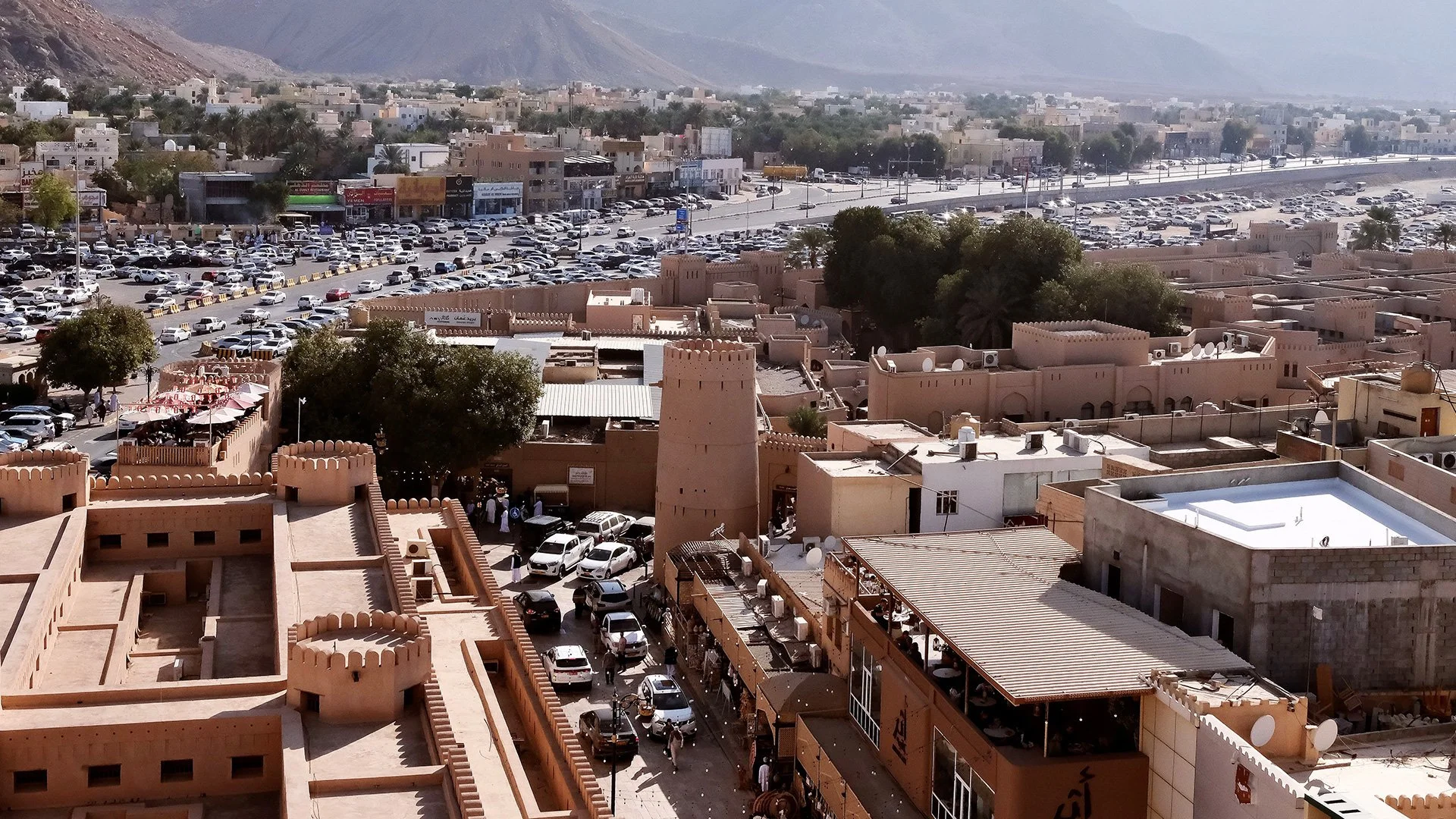
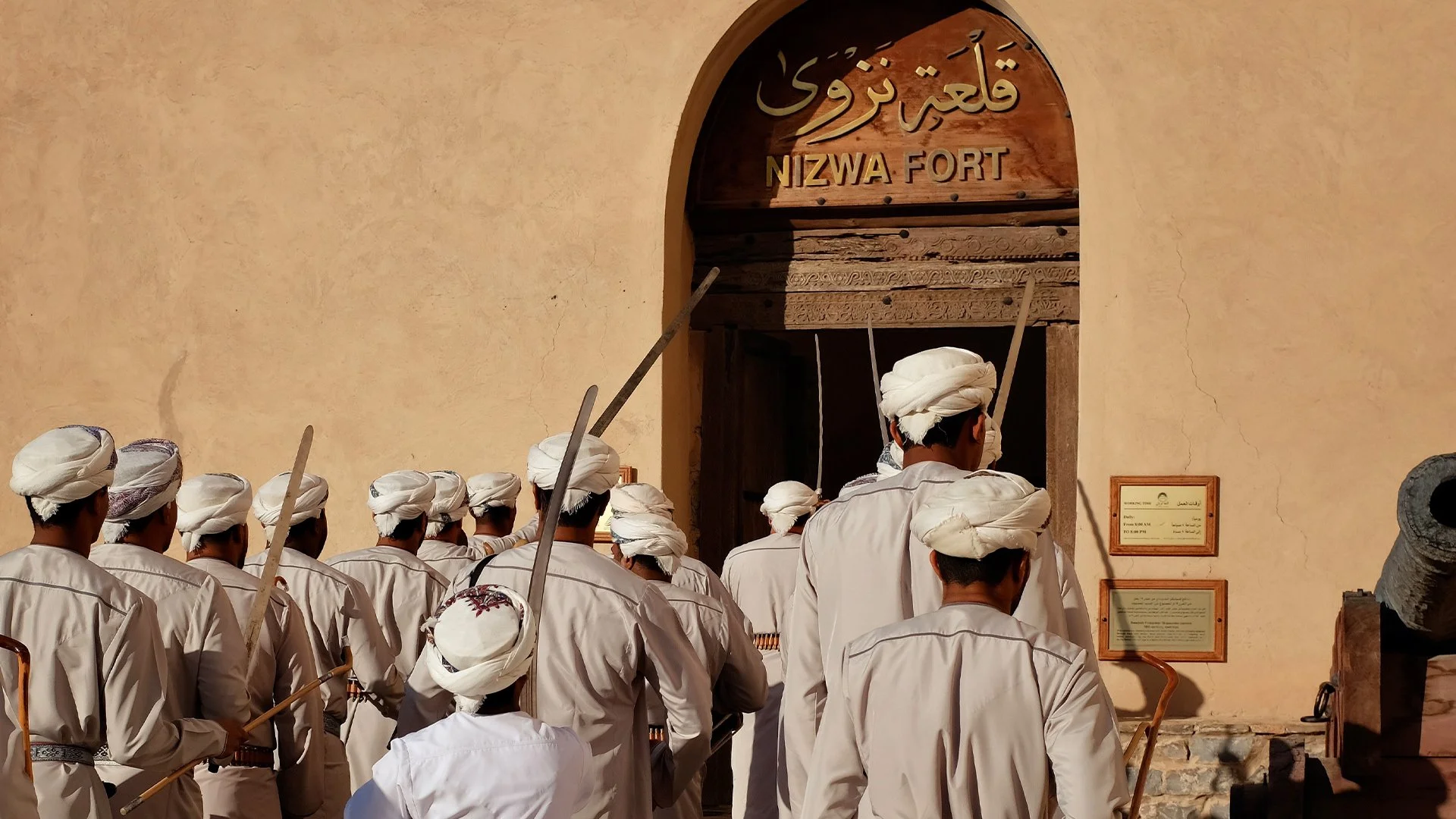
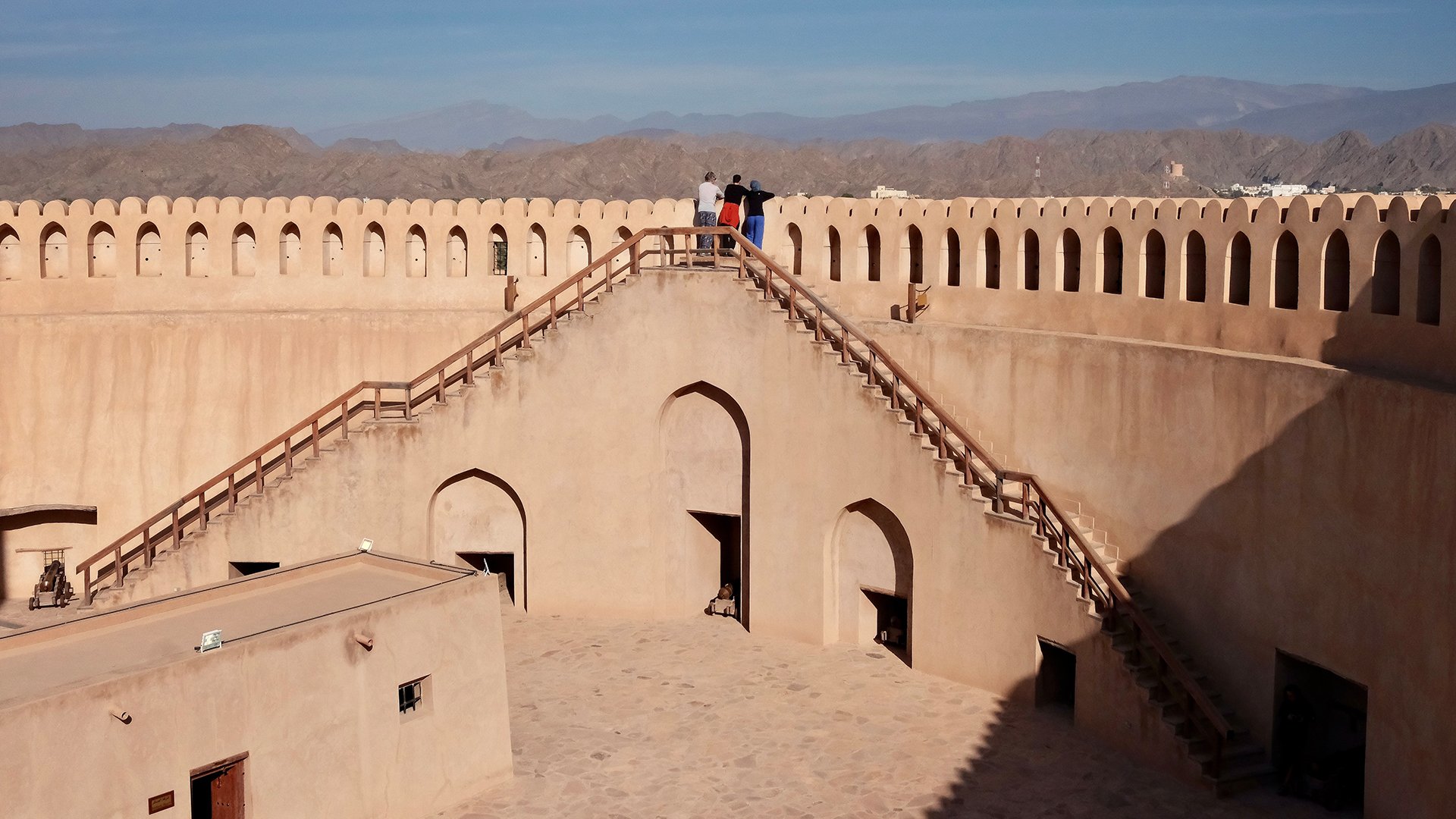
Still buzzing from the lively hustle and bustle of the market, we make our way to Nizwa Fort. In the morning light, it stands tall and proud at the edge of the city wall. We decide to take advantage of the calm at this time of day to explore the history of the fort and its significance for Nizwa. Construction began in 1658 under Imam Sultan bin Saif Al Ya'arubi during a period of political consolidation, when Oman secured its independence and repelled external powers. The fortress was less a residence and more a stone manifestation of authority, protection and foresight. Its mighty round tower measures about 45 metres in diameter and rises about 34 metres high. Its size was strategically designed: space for cannons, supplies and defenders, a wide view over the oasis, trade routes and potential dangers. As we climb the spiral staircase, the secrets of the fort are revealed more and more. Massive walls that once absorbed cannonballs, deep drop shafts that forced attackers to be cautious and slow, and seven wells hidden within the complex tell of a time when tactical endurance was a matter of life and death. Even months-long sieges would not have brought everyday life here to a standstill. Once at the top, Nizwa lies open before us. We look out over the market, the alleys, roofs, mosques, palm groves and the peaks of the Hajar Mountains in the background.
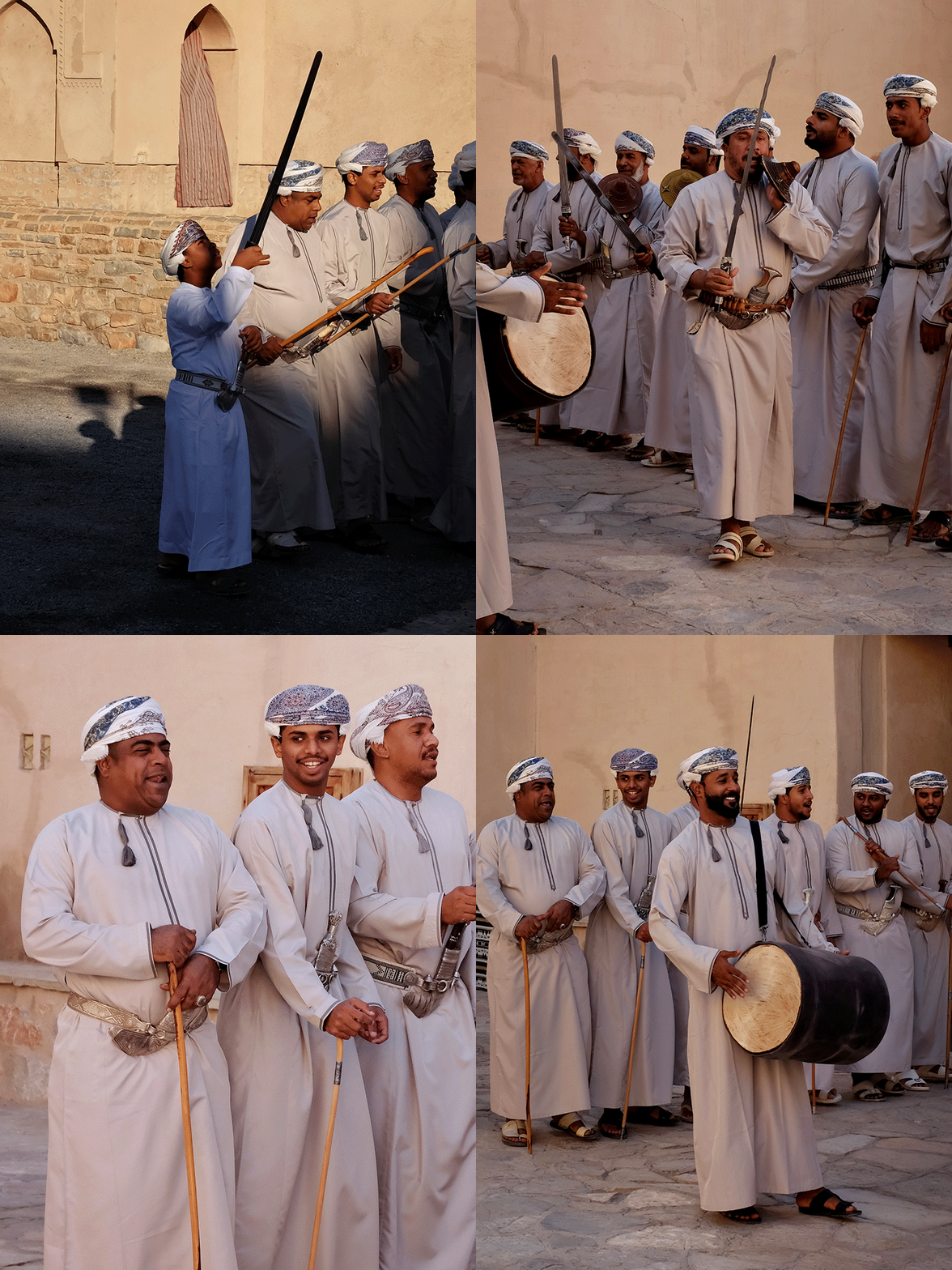
Meanwhile, a local folk group gathers in the courtyard of the fort and begins to sing and drum. The rhythms sound ancient and deeply rooted. The songs seem to tell of times gone by and distant acquaintances. And although we don't understand any of the words, we feel a sense of familiarity echoing in the sound of the drums. Deeply moved, we follow the meaningful melodies, gently swaying, clapping, marvelling and feeling a kind of burgeoning longing. A longing for stability, deceleration and reflection.
And as the beats of the drums echo within the walls of the fortress, we realise that Nizwa is not re-enacting the past – it is continuing to live it. The old town is being carefully restored, mud houses preserved, shady courtyards landscaped. Cafés, museums, markets and mosques are places of peaceful gathering, tolerance and unity. Everything in Nizwa seems to remember, to tell stories, to live. And all this in an atmosphere that is so full of energy, respect and life.
After two eventful days, we shoulder our bags, take one last longing look at the city and set off in the early light of day for the next adventure of our journey. But, as with sailors, this one does not end either. It merely changes its horizon.
Oman, December 2025. | All words and photos by The Sturgheons.